
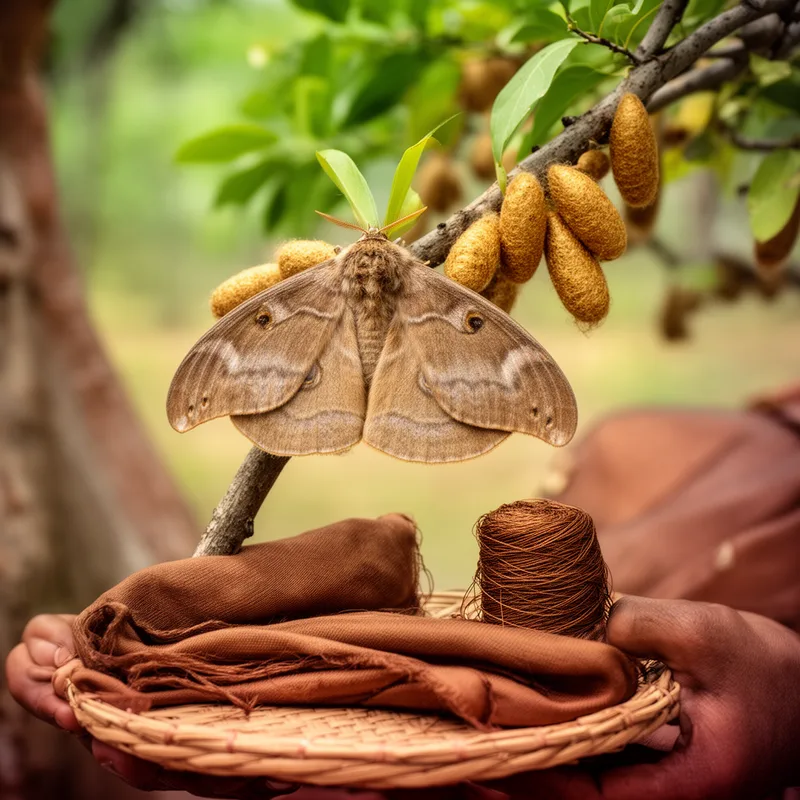
Antheraea mylitta
- noun
- Specialized
- The cocoons of Antheraea mylitta are collected for use in the silk industry.
Examples
-
Antheraea mylitta is cultivated in India for its high-value tussar silk.
-
The Antheraea mylitta is known for its high-quality silk.
-
Research on Antheraea mylitta has helped improve traditional silk production methods.
-
Have you ever seen an Antheraea mylitta in the wild?
-
Antheraea mylitta is known for producing high-quality tussar silk that is highly valued in the textile industry.
-
Farmers in India rear Antheraea mylitta for its silken fibers, which are used to make luxurious garments.
-
The larvae of Antheraea mylitta thrive on specific host plants, making them essential for silk production.
Synonyms


 1
9.9
A moth that makes brownish wild silk used for clothes
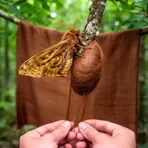
A moth that makes strong brown silk for cloth

A moth that makes brown silk used to make cloth
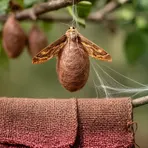
A moth that makes strong brown silk used to make cloth
Surface Forms
Morphology
Antheraea + mylitta
The term is a binomial scientific name: 'Antheraea' is a genus of silk-producing moths, so combined with a species epithet it transparently denotes a particular moth species. However, the specific epithet 'mylitta' is a proper name without independent lexical meaning, and features like its production of tussar silk are not deducible from the parts, so the overall interpretation is only partially predictable.
Etymology
Antheraea mylitta is the scientific name for a wild moth that spins brown cocoons. People collect those cocoons to make brown 'tussar' or 'tasar' silk, so the name is tied to the silk the moth produces.