
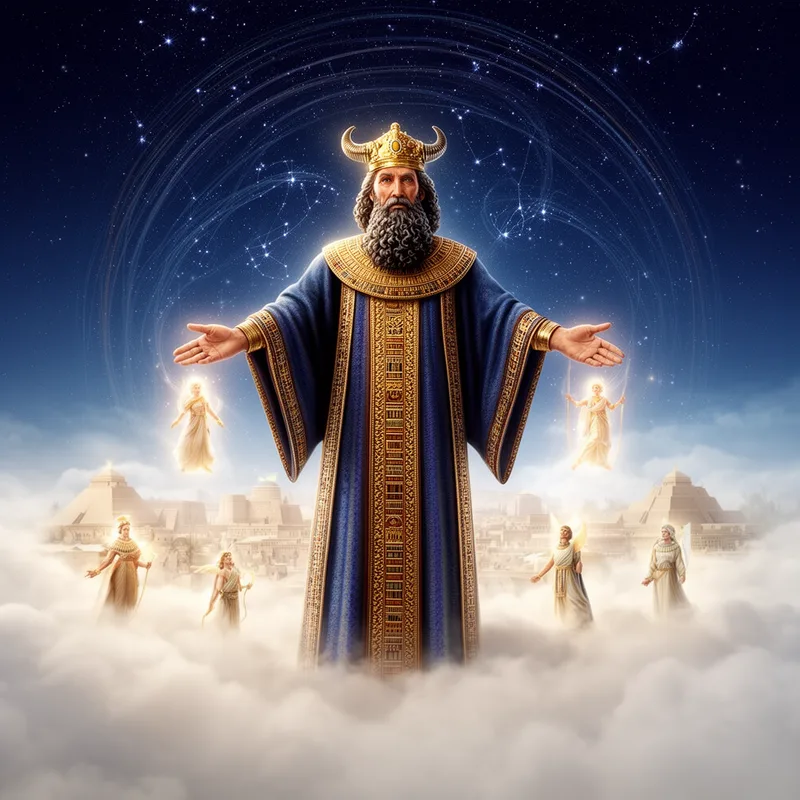
Anshar
- proper noun
- Literature
- The name Anshar in Sumerian signifies the entirety of the upper heavens.
Examples
-
In Babylonian mythology, Anshar is known as the father of the gods.
-
Anshar represents the totality of the upper world.
-
Ancient texts describe Anshar as the supreme father of the Babylonian gods.
-
In some myths, Anshar is equated with the Assyrian deity Ashur.
-
In Babylonian mythology, Anshar is known as the father of the gods and represents the upper world.
-
According to ancient texts, Anshar is associated with the Assyrian god Ashur.
-
The creation story describes Anshar as a powerful deity overseeing the heavens.
Synonyms


 1
9.9
The chief god of the Assyrians linked with war and empire
The chief god of the Assyrians linked to war and the empire, like the Babylonian god Anshar
Surface Forms
Etymology
Anshar comes from ancient Mesopotamia and joins An ('sky') with shar ('all' or 'whole'), so it means the 'whole upper sky'. So, Anshar is seen as the father of the gods and stands for the whole upper world.