
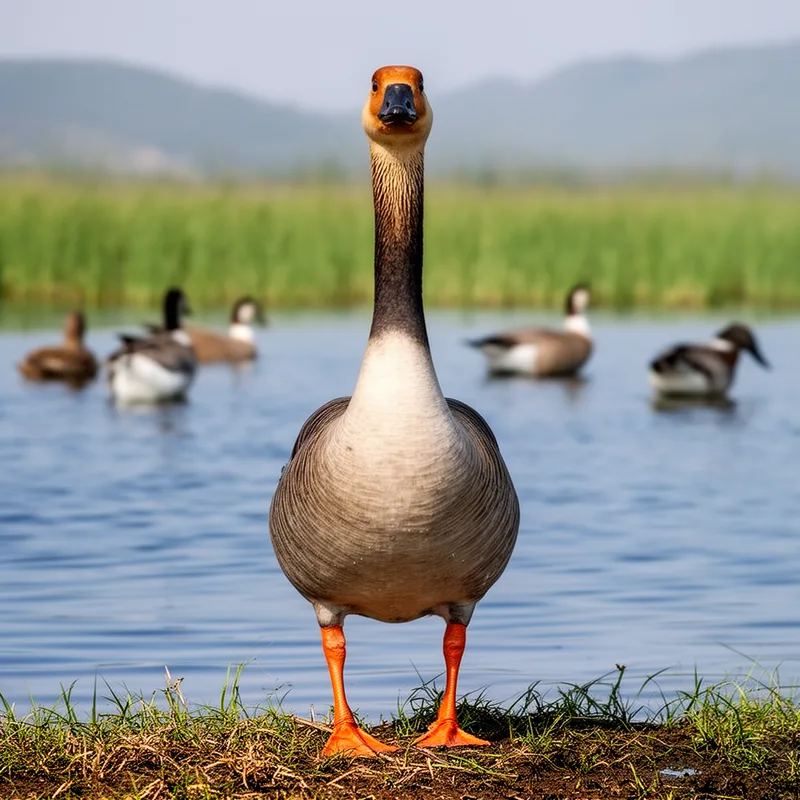
Anser cygnoides
- noun
- Specialized
- Hybrid offspring occur where the Anser cygnoides freely interbreeds with the greylag goose in the wild.
Examples
-
The Anser cygnoides population has declined in some habitats due to overhunting and habitat destruction.
-
In zoos, the Anser cygnoides is often displayed alongside other species of geese.
-
The Anser cygnoides is known for its distinctive appearance.
-
Look at that Anser cygnoides swimming gracefully!
-
The Anser cygnoides is easily recognized by its long neck and unique coloration.
-
Wild populations of Anser cygnoides are often seen flying in V-shaped formations during migration.
-
In the spring, the Anser cygnoides returns to its breeding grounds after wintering in warmer areas.
Surface Forms
Morphology
Anser + cygnoides
This is a scientific binomial composed of the genus 'Anser' (geese) and the species epithet 'cygnoides' ('swan-like'), so a learner who knows both constituents can infer it denotes a swan-like goose (the swan goose). Latin taxonomic names are internationally compositional and follow predictable morphology (-oides = resembling), making the overall meaning derivable from the parts.
Etymology
Anser cygnoides is a scientific name from Latin: Anser means 'goose' and cygnoides means 'swan-like', so it paints the picture of a goose that looks a little like a swan. That's why the name is used for the swan goose found in northeast Asia.

