
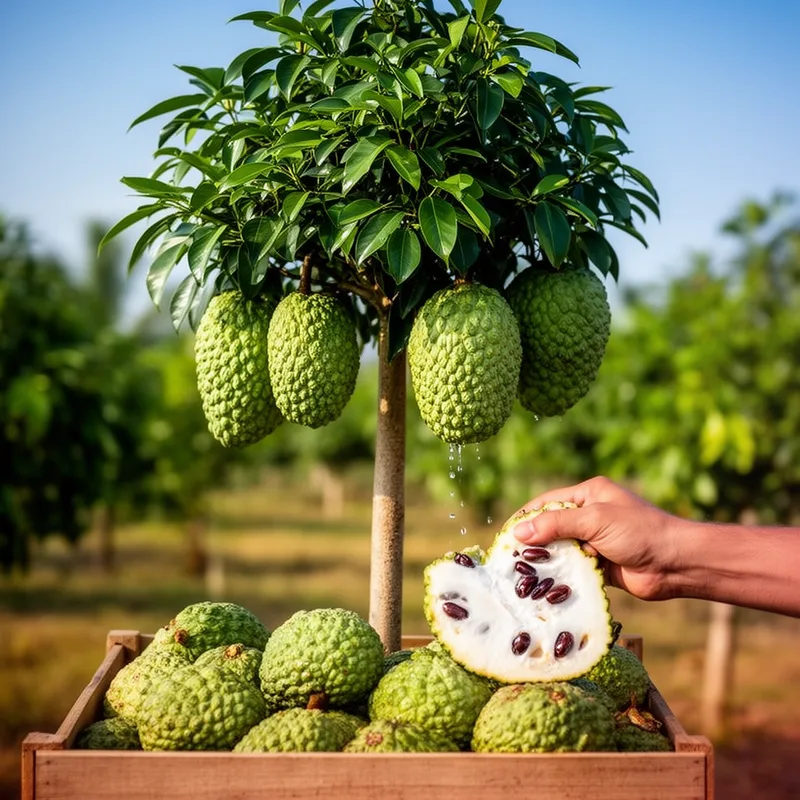
Annona muricata
- noun
- /əˈnoʊnə mʊrɪˈkɑːtə/
- Specialized
- Farmers in tropical regions cultivate Annona muricata for its unique and flavorful fruit.
Examples
-
The Annona muricata tree grows well in tropical climates.
-
The leaves of Annona muricata are sometimes used in traditional herbal medicine.
-
Scientists are studying compounds found in Annona muricata for their potential health benefits.
-
I love the taste of Annona muricata.
-
Farmers in tropical regions cultivate Annona muricata for its unique and flavorful fruit.
-
The fruit of Annona muricata is not only delicious but also has a slightly acidic taste.
-
In many tropical areas, people enjoy sipping juice made from Annona muricata to cool off during hot weather.
Synonyms


 1
7.7
1
7.7
A small tropical tree that makes a large spiky fruit with sour, juicy flesh

A tropical tree that has large spiky fruit with juicy sour flesh

A small tropical tree that grows large soft fruit with a slightly sour taste
Surface Forms
Morphology
Annona + muricata
This is a Latin binomial (genus + specific epithet) whose referent ('soursop') is a conventional species name rather than a meaning compositionally derived from the parts. The second element ('muricata') is a Latin epithet not transparent to an average B1 learner, so the species identity cannot be predicted from the constituents.
Etymology
Annona muricata may come from two parts: Annona is from a native Caribbean word for 'custard apple' and muricata is a Latin word meaning 'spiny'. So the name gives a clear picture — a prickly green fruit with soft, custard-like white flesh, which is why we know it today as soursop.