
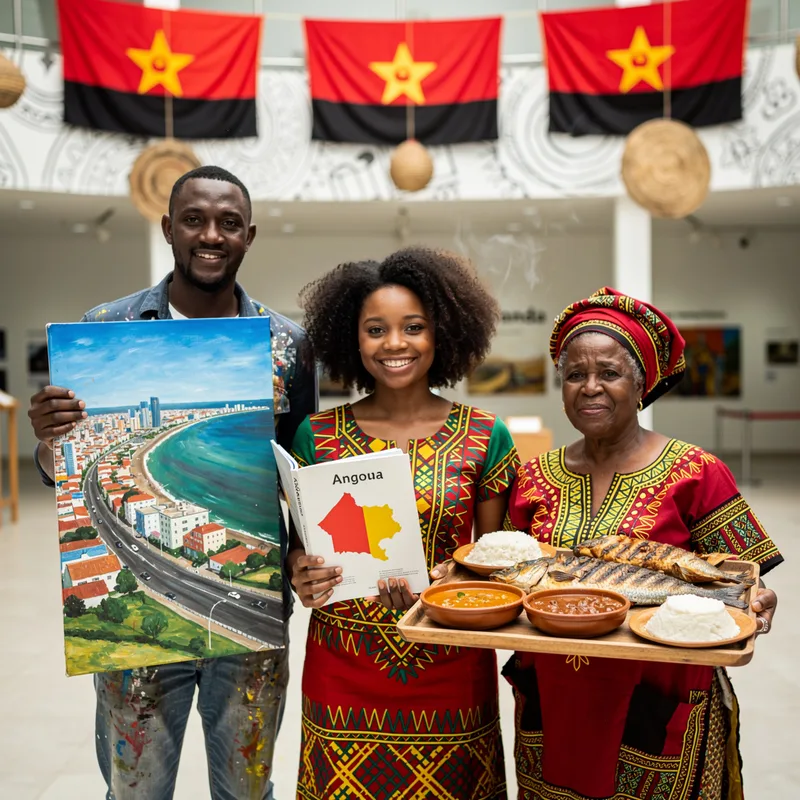
Angolan
 2
3.8

- adjective
- /æŋˈɡoʊlən/
- Some Angolan artists and critics are less convinced, suspicious about its funding sources.
- Angolan government
- Angolan War
- Angolan Civil
Loading YouTube…
Watch on YouTubeAnd then after that, it made Angolan news, like it was in a bit of British news, I think.
- And then after that, it made Angolan news, like it was in a bit of British news, I think.
- And, and meeting ETN and who was this character who was doing African, African Angolan capoeira.
Examples
-
The Angolan government will denounce any non-sanctioned actions.
-
Nearly twenty years later, the army recalled Uncle Blas to fight in the Angolan civil war.
Fiction book (1997) -
20 Angolan children continue to have one of the highest mortality rates in the world.
Academic text (1990) -
As a result, there has been little focus on the human costs of the Angolan strife.
Academic text (1990) -
The MPLA had the support of more than 90% of the Angolan people.
-
Furthermore, the almost continual state of war since independence has put a huge drain on the Angolan economy.
Academic text (1992) -
The UNHCR and local Angolan organizations will have to support efforts for full repatriation and integration.
Academic text (1992) -
Whether journalists were covering the Angolan war from Washington, Jamba, or Pretoria, the same stereotypes appeared in their reports.
Academic text (1992) -
Delinda Collier's commentary picks up on this dichotomy, exploring how it plays out in an Angolan context.
Academic text (2008) -
The Angolan culture is rich in music and dance, reflecting its diverse heritage.
Surface Forms
Morphology
Etymology
Angolan comes from the country name Angola, itself from a local word 'ngola' meaning 'king'. The ending -an, as in American or Italian, shows that Angolan means 'relating to Angola', its people, or its culture.