
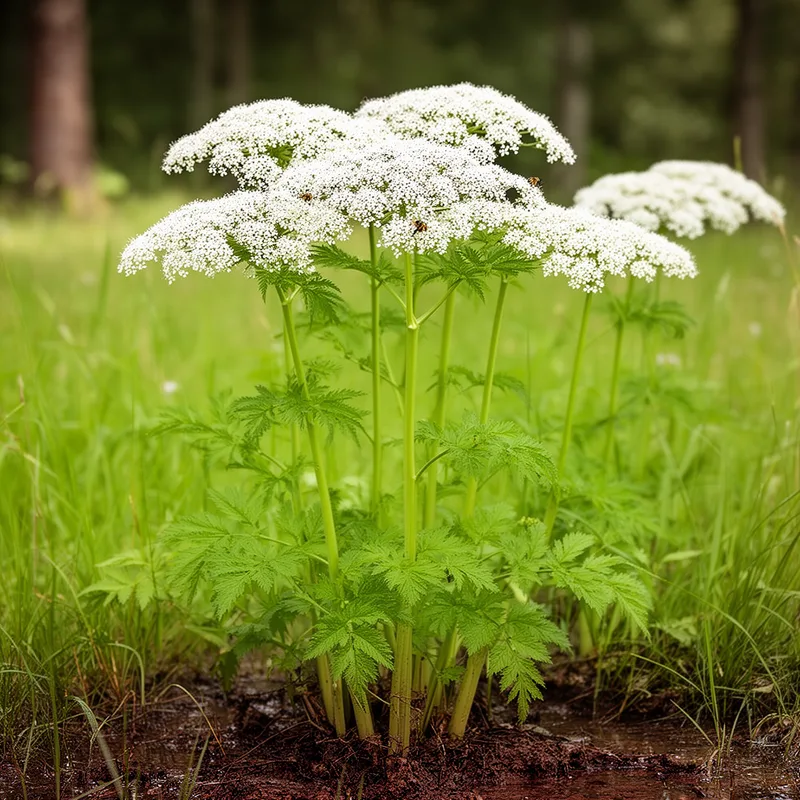
Angelica sylvestris
- noun
- Specialized
- The white umbels of Angelica sylvestris attract many pollinators during summer.
Examples
-
Angelica sylvestris thrives in damp meadows and woodland edges across Europe.
-
Botanists noted the spread of Angelica sylvestris on Cape Breton Island.
-
The Angelica sylvestris plant thrives in damp meadows.
-
Have you seen an Angelica sylvestris flower before?
-
Angelica sylvestris grows best in shaded areas and moist soil found in European woodlands.
-
The fragrant leaves of Angelica sylvestris can be used in herbal remedies.
-
In the spring, Angelica sylvestris produces clusters of delicate white flowers in meadows.
Synonyms
A European plant with many leaves and clusters of small white or pink flowers that grows in wet meadows
Surface Forms
Morphology
angelica + sylvestris
The name is compositional: 'angelica' denotes a plant and the epithet 'sylvestris' (Latin for 'of the woods' / 'woodland') specifies its habitat, so together they yield 'woodland/wild angelica' which matches the species description. Although 'sylvestris' is a Latin epithet and may be unfamiliar, a learner who knows both constituents can predict the meaning via standard binomial naming patterns.
Etymology
Angelica sylvestris gets its name from two old words: Angelica comes from a story that an angel showed the plant as a 'medicine', and sylvestris means 'of the woods' because the herb grows wild in woods and damp meadows. So the name helps us remember that this is a healing plant found in the woods.

