
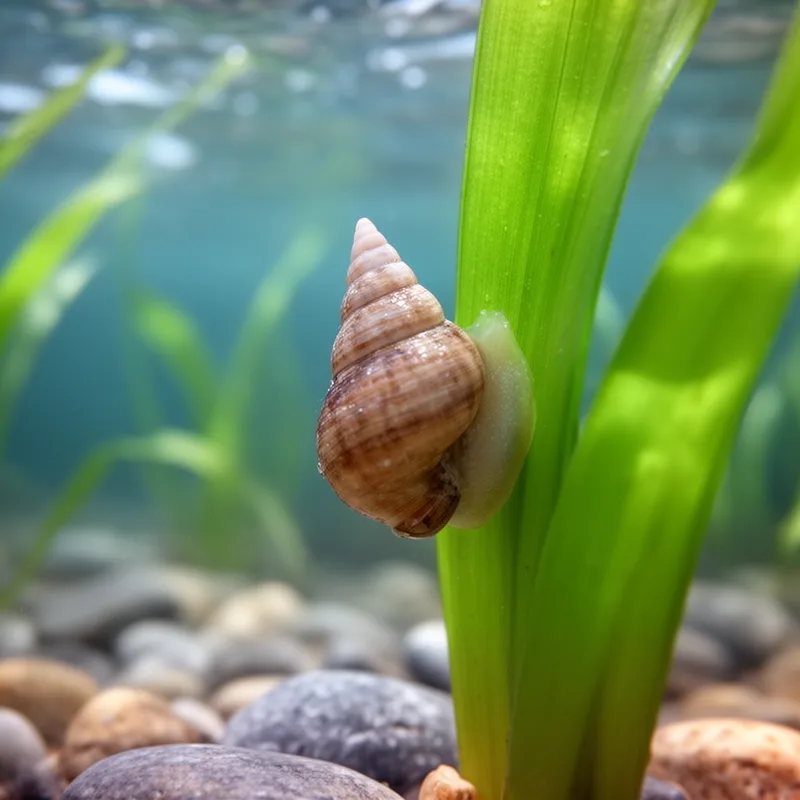
Ancylus fluviatilis
- noun
- Specialized
- Ancylus fluviatilis is commonly found on rocks and aquatic plants in clean, fast-flowing streams.
Examples
-
Freshwater biologists study the distribution of Ancylus fluviatilis to monitor ecosystem health.
-
The limpet-like appearance of Ancylus fluviatilis often leads to confusion with true marine limpets.
-
The Ancylus fluviatilis can often be found on the leaves of aquatic plants.
-
Have you ever seen an Ancylus fluviatilis in the wild?
-
Ancylus fluviatilis is commonly found on rocks and aquatic plants in clean, fast-flowing streams.
-
Freshwater biologists study the distribution of Ancylus fluviatilis to monitor ecosystem health.
-
The limpet-like appearance of Ancylus fluviatilis often leads to confusion with true marine limpets.
Synonyms

A small cone-shaped freshwater snail that clings to plants and rocks

A small cone-shaped freshwater snail that lives on stones and plants and eats algae
Surface Forms
Morphology
Ancylus + fluviatilis
This is a Latin binomial (genus + specific epithet): 'Ancylus' names a small freshwater snail and 'fluviatilis' is a Latin-derived form meaning 'of rivers' or 'river-dwelling'. If a learner knows both constituents and recognizes the Latin root, the species meaning (a river-dwelling Ancylus snail) is derivable, but because it is a specialized scientific name using Latin morphology and taxonomic conventions it is not fully transparent to an average B1 learner.
Etymology
Ancylus fluviatilis comes from old Greek and Latin words: Ancylus may come from a Greek word for 'curved' or 'hook', and fluviatilis means 'of the river'. So the name creates a picture of a small, curved snail that lives on plants and rocks in rivers, which explains what this animal is today.

