
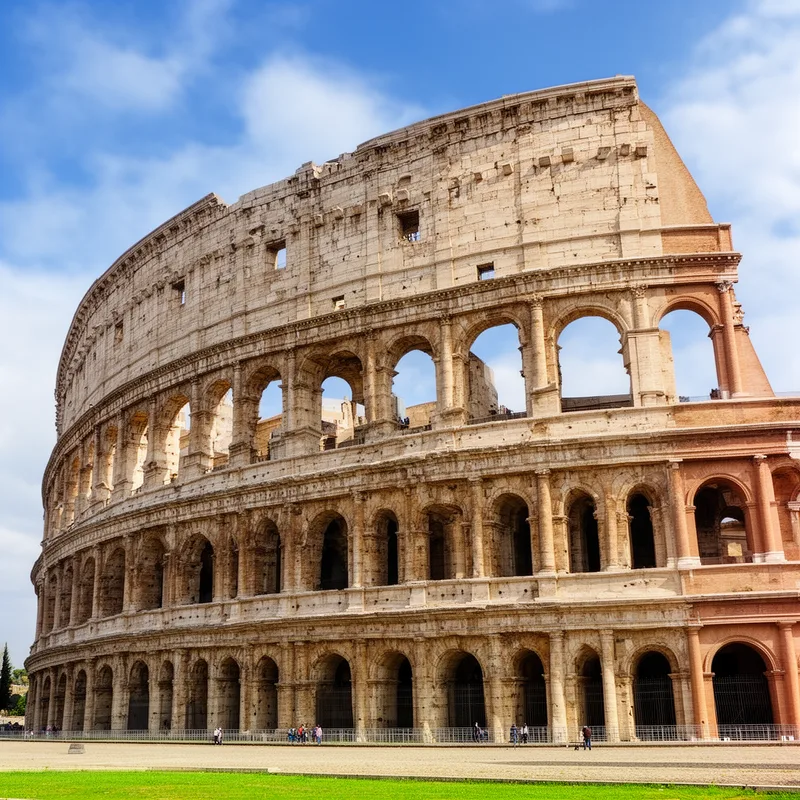
Amphitheatrum Flavium
- proper noun
- /æmˈfɪθiˌeɪtrəm ˈfleɪviəm/
- Formal
 :
anfiteatro Flavio
:
anfiteatro Flavio
- The Amphitheatrum Flavium, known as the Colosseum, hosted gladiatorial contests in ancient Rome.
Examples
-
The Amphitheatrum Flavium was the largest arena of its kind in the Roman world.
-
The Amphitheatrum Flavium is one of the most iconic structures in Rome.
-
Archaeologists have uncovered new artifacts near the Amphitheatrum Flavium during recent excavations.
-
Historians often use the term Amphitheatrum Flavium when referring to the origins of the Colosseum.
-
Did you visit the Amphitheatrum Flavium during your trip to Italy?
-
Tourists from around the world flock to the Amphitheatrum Flavium to witness its grandeur every year.
-
Restoration efforts have improved the condition of the Amphitheatrum Flavium, making it safer for visitors.
Synonyms
 45
4.7
45
4.7

A large building like a sports stadium with many seats for events
 8
4.6
8
4.6
A large old open building in Rome where people watch gladiator fights and public shows
Surface Forms
Morphology
Amphitheatrum + Flavium
The compound is a straightforward Latin description: 'Amphitheatrum' corresponds to 'amphitheatre' and 'Flavium' signals association with the Flavian dynasty (i.e. 'Flavian amphitheatre'), so the meaning 'the amphitheatre belonging to the Flavians' is directly recoverable from the parts. Although the items are given in Latin (and may be unfamiliar to many B1 learners), if a learner knows the constituent forms/meanings the overall referent (the Colosseum as the Flavian amphitheatre) is transparently derivable.
Etymology
Amphitheatrum Flavium comes from Latin and literally means 'Flavian amphitheatre': amphitheatrum is a round theatre with seats all around and Flavium is the family name of the Flavian emperors who built it, so the name is the formal Latin name for the Colosseum.