
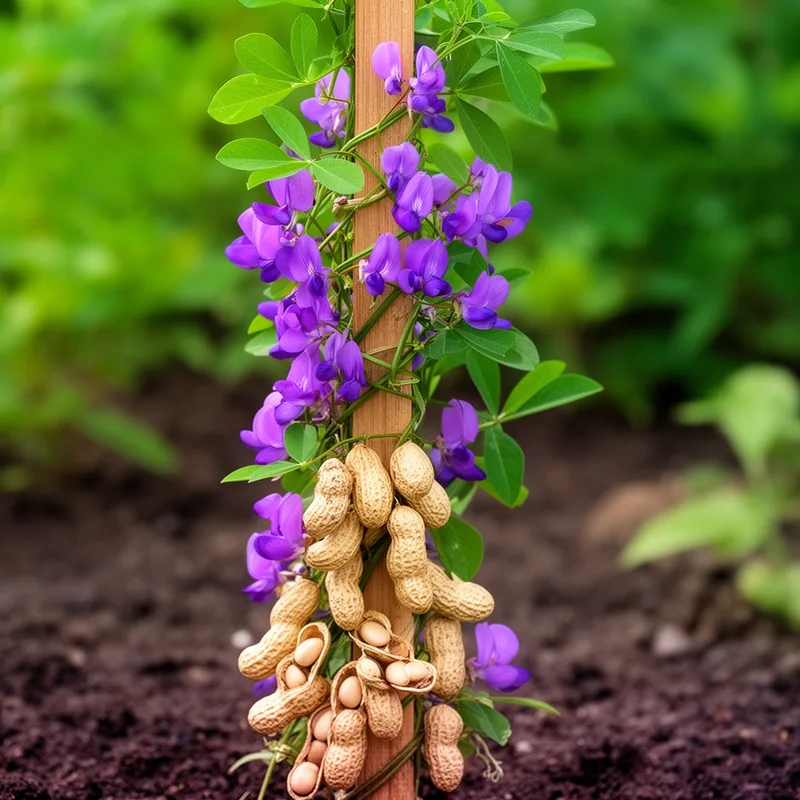
Amphicarpaea bracteata
- noun
- /ˌæmfɪˈkɑrpiə brækˈtiːə/
- Specialized
- The seeds of Amphicarpaea bracteata are prized by foragers for their peanut-like flavor.
Examples
-
Some gardeners cultivate Amphicarpaea bracteata to enrich soil and attract pollinators.
-
Wildlife such as deer and small mammals often feed on the pods of Amphicarpaea bracteata.
-
The Amphicarpaea bracteata is a unique plant.
-
Have you ever seen an Amphicarpaea bracteata in bloom?
-
Gardeners often plant Amphicarpaea bracteata to improve soil quality and draw in beneficial insects.
-
Foraging enthusiasts enjoy harvesting Amphicarpaea bracteata for its edible pods that taste similar to peanuts.
-
Various animals, including deer, frequently browse on the edible pods of Amphicarpaea bracteata.
Synonyms

A climbing plant from eastern North America with purple flowers and edible underground pods like small peanuts

A vine with purple flowers that makes edible pods underground like peanuts

A vine that makes edible pods underground like peanuts
Surface Forms
Morphology
Amphicarpaea + bracteata
This is a scientific binomial (a taxonomic proper name) rather than a compositional phrase, so its detailed meaning (a particular vine with specific flowers and pods) cannot be derived from the parts. One element ('bracteata') is a Latin epithet not recognizable to a B1 learner, and species names function as labels across languages, making the expression opaque to learners who only know the constituents.
Etymology
Amphicarpaea bracteata may come from parts that mean 'two fruits' and 'small leaf', with amphi 'both', carpaea 'fruit', and bracteata 'small leaf-like part'. This matches the plant: it makes pods above ground and also underground, so it really has 'two fruits', and each flower has a small leaf-like part, which helps you remember the name and the peanut-like seeds.

