
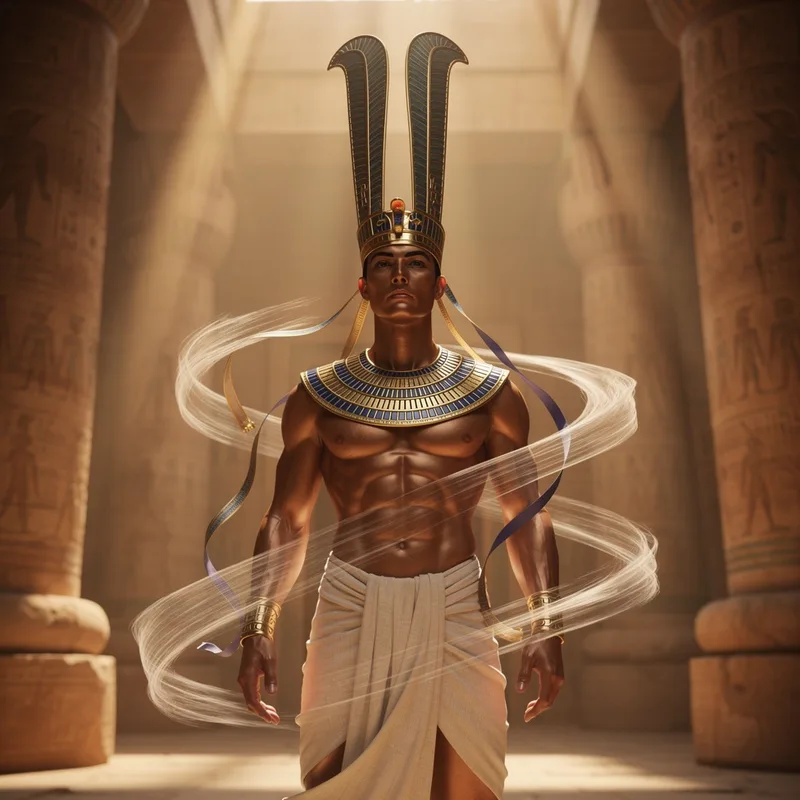
Amon
 11
9.9
11
9.9

- proper noun
- Literature
- I swear by the mighty power of Amon-Ra, whose anger can shatter the world, and by the dread power of Set that I will never betray my trust as high priest of Karnak.
Examples
-
This was Pharaoh, direct descendant of our deity Amon, God of the sun who rules the heavens, as Pharaoh rules the earth.
-
Were they not inspired in their work and their thought by Osiris and Amon?
Fiction book (2001) -
The mighty Amon Ra commands you!!
-
And what is Osiris, and what is Amon?
Fiction book (2001) -
Such is the curse of Amon-Ra, king of all the gods!
-
I'm a priestess of Amon, and you are the serpent.
-
The ancient Egyptians built grand temples to honor the deity Amon, who was believed to control the air and breath.
-
Many rituals were performed in honor of Amon at Thebes, celebrating his significance in Egyptian mythology.
-
As the personification of air, Amon played a crucial role in the creation myths of ancient Egypt.
Synonyms
 58
9.9
58
9.9
A god in ancient Egypt who represents air and breath and is worshipped in Thebes
 2
9.9
2
9.9
An ancient Egyptian god of air and breath worshipped in Thebes
Surface Forms
Etymology
Amon comes from the ancient Egyptian name Amun, which means 'the hidden one' and was linked with 'air' and 'breath'. So thinking of Amon as an invisible wind or 'hidden' breath helps you remember him as the Egyptian god of air who was worshipped at Thebes.