
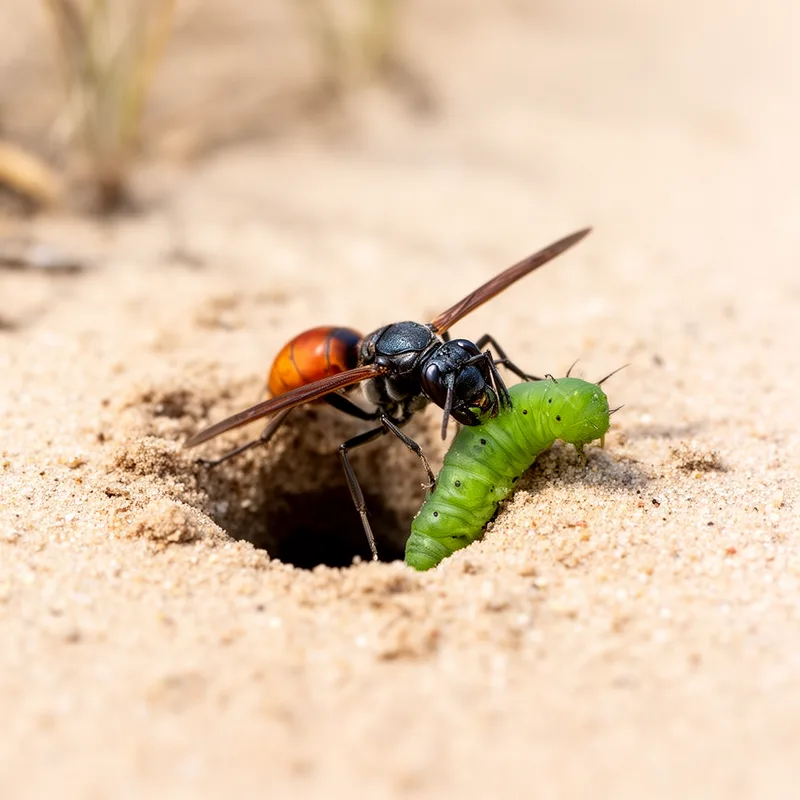
Ammophila
- proper noun
- Specialized
- In sandy habitats, the Ammophila digs burrows to create a safe space for its young.
Examples
-
Because the Ammophila females are forced to open and close their nests to keep the larvae inside fed, they lose many of their eggs to cuckoo flies (Field and Brace 2004).
Academic text (2008) -
The Ammophila wasp uses its hunting skills to capture caterpillars for its larvae.
-
It is entirely reasonable to suppose that if a second Ammophila female were available to serve as a guard, the loss of eggs would be considerably reduced.
Academic text (2008) -
An Ammophila female expertly hunts its prey to provide food for her developing larvae.
Synonyms

A wasp that lives alone, digs a nest in soil and brings stung insects for its young to eat
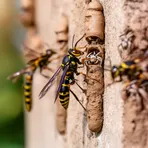
A family of solitary wasps like mud daubers that build nests
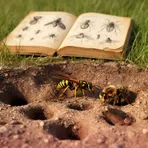
An old scientific name for wasps and bees that dig into the ground
Surface Forms
Etymology
Ammophila comes from the Greek parts ammo- 'sand' and -phila 'loving', so it means 'sand-lover'. That's why these wasps dig and live in sandy soil, making burrows to raise their young.

