
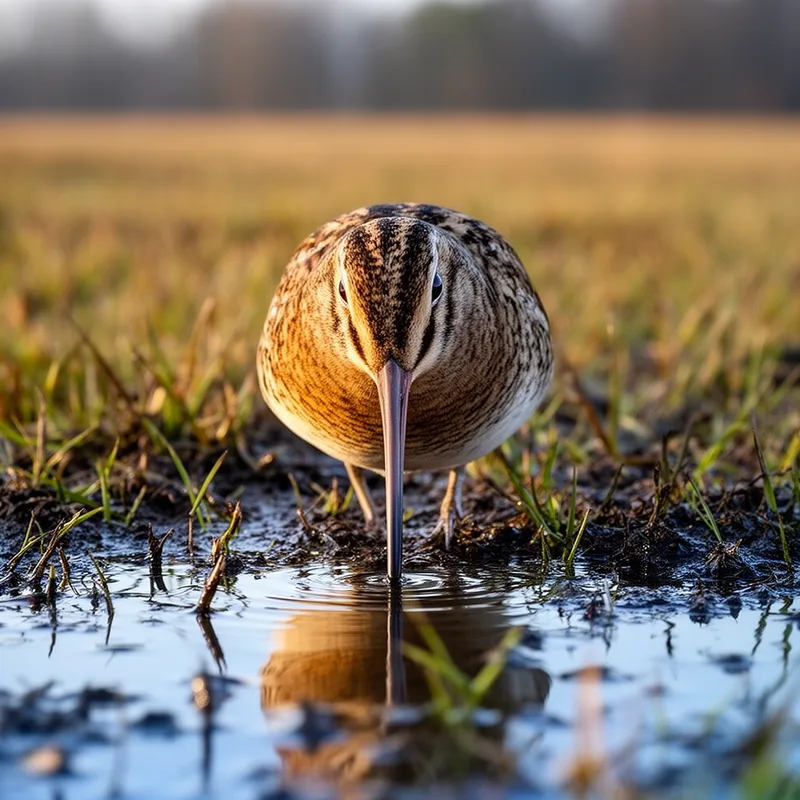
American woodcock
- noun
- /əˈmɛrɪkən ˈwʊdkɒk/
- US
- Hunters often seek the American woodcock during the fall migration because of its unique flight patterns.
Examples
-
Each spring, the unique courtship display of the American woodcock attracts birdwatchers from across the country.
-
The American woodcock is sought after by bird hunters for its elusive nature.
-
We spotted an American woodcock near the edge of the wetland at dawn.
-
The American woodcock is known for its distinctive mating display.
-
Many hunters enjoy hunting the American woodcock during the fall season.
-
The American woodcock is known for its long bill, which it uses to probe the ground for earthworms.
-
Many birdwatchers enjoy observing the American woodcock as it performs its distinctive aerial displays in the spring.
Synonyms

 5
8.1
5
8.1

A brown game bird with a long beak and short legs that lives in forests

A small North American bird with a long bill that uses it to find worms and people hunt for food

A North American bird with a long bill that makes a spiral flight during mating season
Surface Forms
Morphology
The meaning is directly compositional: 'American' marks geographic origin and 'woodcock' names the species, so the phrase simply denotes a woodcock from America. This adjective+noun naming pattern is transparent and cross-linguistically common, so a B1 learner who knows both constituents would understand the referent.
Etymology
American woodcock gets its name from where it lives and from an old word for a bird: the 'woods' gives wood, and cock was used for a 'male bird'. That's why the name refers to this small North American bird with a long bill that people often hunt.