

American mink
- noun
- /əˈmɛrɪkən mɪŋk/
- US
- The American mink was introduced to Europe for fur farming and has established wild populations there.
Examples
-
Conservationists are concerned about the impact of the American mink on native wildlife.
-
The rich brown fur of the American mink is highly prized in the fashion industry.
-
Look at that American mink swimming in the lake!
-
The American mink is known for its luxurious fur.
-
The American mink is a semi-aquatic animal that hunts fish and small mammals.
-
You can often spot the American mink near rivers and lakes, where it searches for food.
-
Many fur coats are made from the pelts of the American mink, known for their softness.
Synonyms
 11
4.6
11
4.6

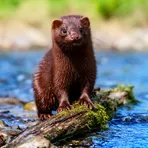
A small slim animal that lives near water and has soft dense fur
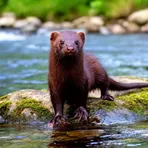
A small animal that lives near water with dark brown fur from North America
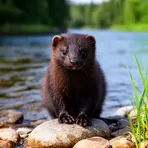
A small wild animal with soft dark fur that lives near rivers in North America
Surface Forms
Morphology
The meaning is directly compositional: 'American' specifies origin/nationality and 'mink' names the animal, so a learner who knows both words can infer it refers to a mink from America. This adjective + noun nationality pattern is cross-linguistically common and follows standard English compounding, making the expression immediately understandable to B1 learners.
Etymology
American mink is a simple name that tells you the animal and where it came from: mink may come from an old European word for a small, weasel-like animal, and American shows it is the kind from North America, so the name today means the North American fur-bearing mammal.