
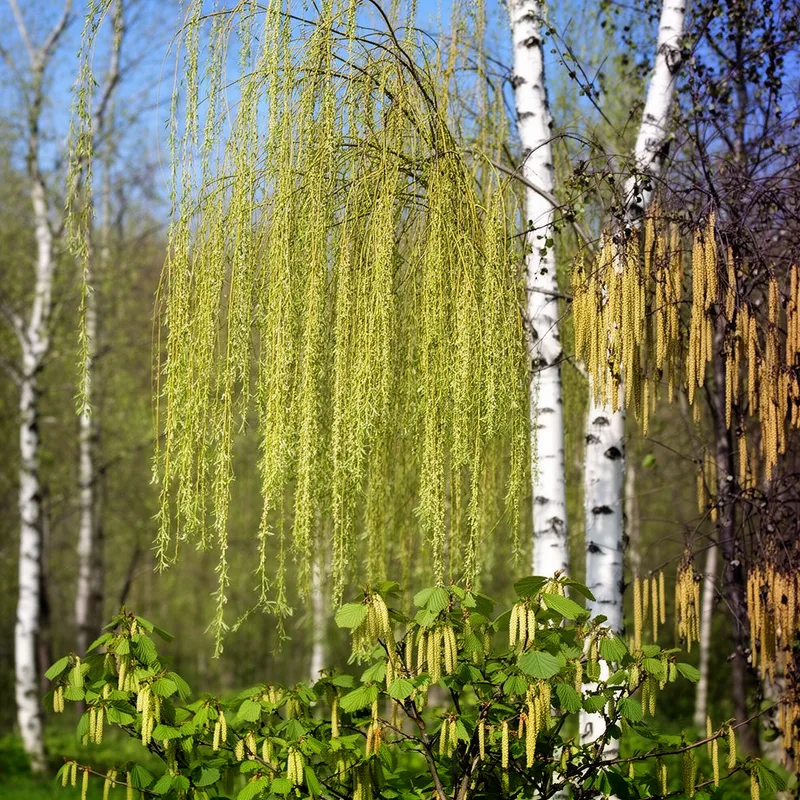
Amentiferae
- noun
- /əˌmɛn.tɪˈfɛr.i/
- Archaic
- In botanical studies, the term Amentiferae refers to plants that produce catkins, such as willows and birches.
Examples
-
Willows and birches are part of the Amentiferae group.
-
Many trees once classified in the Amentiferae group are now distributed among various families.
-
Botanists rarely use the term Amentiferae in modern plant taxonomy.
-
The Amentiferae included plants like alder, oak, and birch.
-
The Amentiferae family includes many species of trees.
-
The classification of plants within the Amentiferae group has changed significantly over the years.
-
Several types of trees, including birch and willow, belong to the Amentiferae category.
Synonyms

A former group of mostly woody flowering plants like oaks and birches
Surface Forms
Etymology
Amentiferae comes from Latin amentum 'catkin', a small hanging flower, and the part -ferae meaning 'bearing' or 'to carry', like in English transfer 'to carry across'. So Amentiferae means 'plants that bear catkins', which is why it was the name for trees such as willows and birches.

