
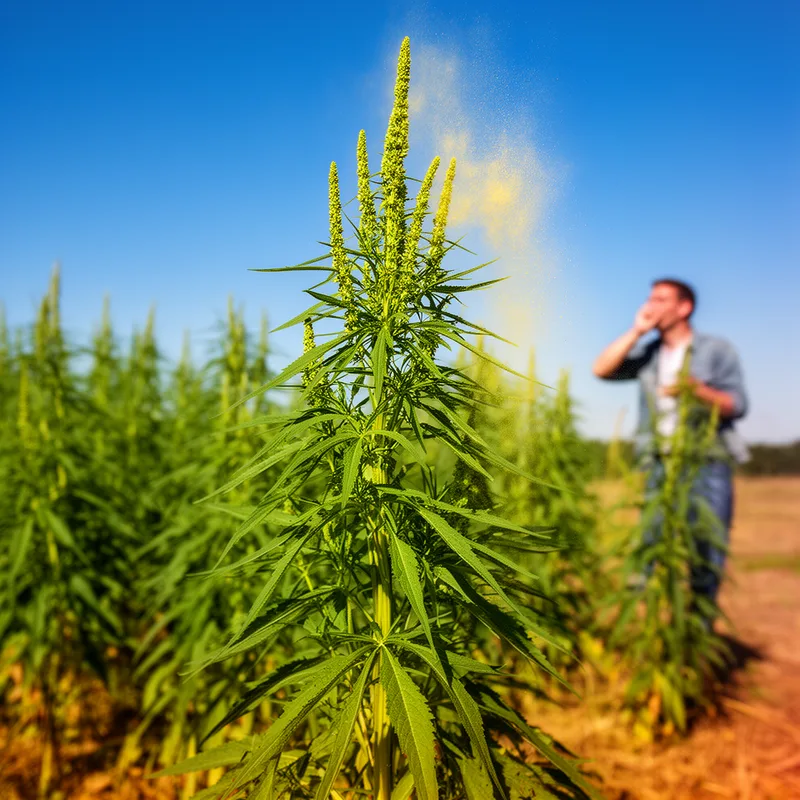
Ambrosia trifida
- noun
- /æmˈbroʊziə ˈtraɪfɪdə/
- Specialized
- The leaves of Ambrosia trifida are typically divided into three or five distinctive lobes.
Examples
-
Ambrosia trifida is a major source of pollen allergies in North America during late summer.
-
Farmers often struggle to control the rapid spread of Ambrosia trifida in their fields.
-
The Ambrosia trifida is notorious for causing allergies.
-
Many farmers struggle with Ambrosia trifida in their fields.
-
Ambrosia trifida can grow over six feet tall and is often found in disturbed areas and agricultural fields.
-
The coarse texture of Ambrosia trifida leaves makes it easy to identify among other plants.
-
In late summer, pollen from Ambrosia trifida can trigger severe allergic reactions in many people.
Synonyms

A tall annual plant with rough leaves divided into three or five parts common in North America
Surface Forms
Morphology
ambrosia + trifida
This is a botanical binomial: the genus name 'Ambrosia' (ragweed) plus the species epithet 'trifida' (from Latin meaning 'three‑cleft' or 'three‑lobed'), so the phrase literally denotes a specific Ambrosia species characterized by three‑lobed leaves. Because the name is directly descriptive and follows the regular genus+descriptor pattern found across languages, a learner who knows both constituents can infer it denotes a type of ragweed.
Etymology
Ambrosia trifida joins Ambrosia, a word that means 'food of the gods', and trifida, which means 'split into three'. The second part describes the plant's three-lobed leaves, so the name helps you remember this tall 'giant ragweed'.

