
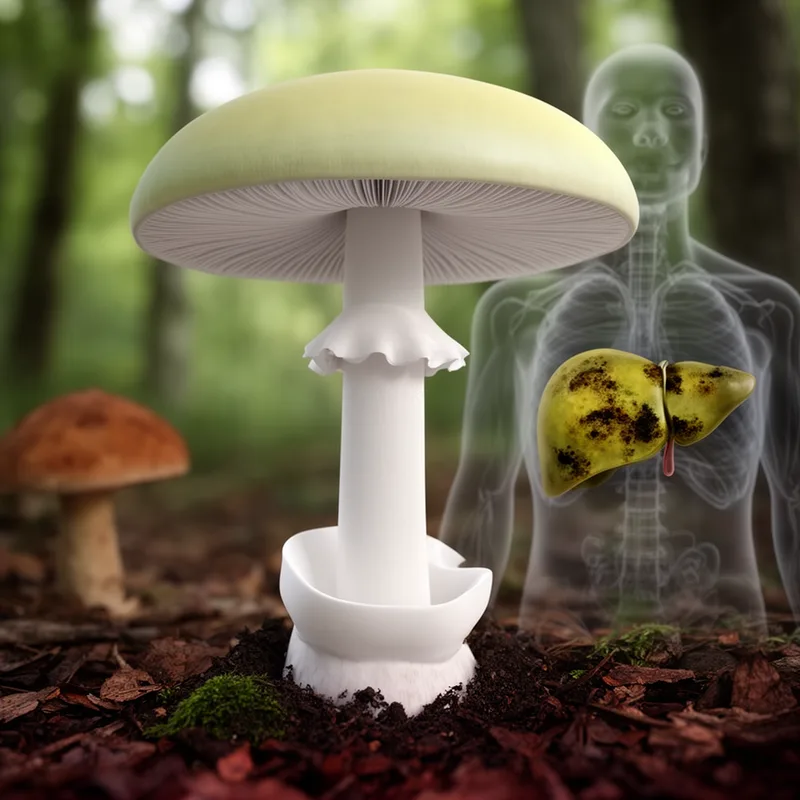
Amanita phalloides
- noun
- /əˈmænɪtə fəˈloʊɪdiːz/
- Specialized
- Consuming even a small amount of Amanita phalloides can lead to serious, often fatal, liver damage.
Examples
-
The notorious Amanita phalloides mushroom is responsible for most fatal poisonings due to mistaken identity with edible varieties.
-
Foragers must be very careful to distinguish Amanita phalloides from edible mushrooms like Agaricus.
-
The Amanita phalloides is often found in wooded areas.
-
Did you know that Amanita phalloides is also called the death cap?
-
Consuming even a small amount of Amanita phalloides can lead to serious, often fatal, liver damage.
-
The notorious Amanita phalloides mushroom is responsible for most fatal poisonings due to mistaken identity with edible varieties.
-
Foragers must be very careful to distinguish Amanita phalloides from edible mushrooms like Agaricus.
Synonyms

A very poisonous white mushroom that can kill people and is often mistaken for edible mushrooms
Surface Forms
Morphology
Amanita + phalloides
The string functions as a Linnaean binomial: knowing 'Amanita' signals a fungal genus (often associated with poisonous species), so a learner could infer this is the name of a fungus, but the specific epithet 'phalloides' is not a common English word and gives no clear meaning to a B1 learner. Scientific Latin names serve as labels across languages, so the item is partially interpretable as a species name but its precise sense ('death cap', very poisonous, pale, cup-shaped base) is not derivable from the constituents alone.
Etymology
Amanita phalloides comes from the mushroom group name Amanita and the word phalloides, which means 'penis-shaped' because the white stalk and rounded cap make that image clear. It is commonly called the 'death cap' because, though it looks harmless like edible mushrooms, eating it can be deadly, so the name reminds you it is dangerous.

