
Amalekite
 1
9.9

- proper noun
- /ˌæməˈleɪkaɪt/
- Literature
- Perhaps the Amalekite sensed something ominous in David's tone.
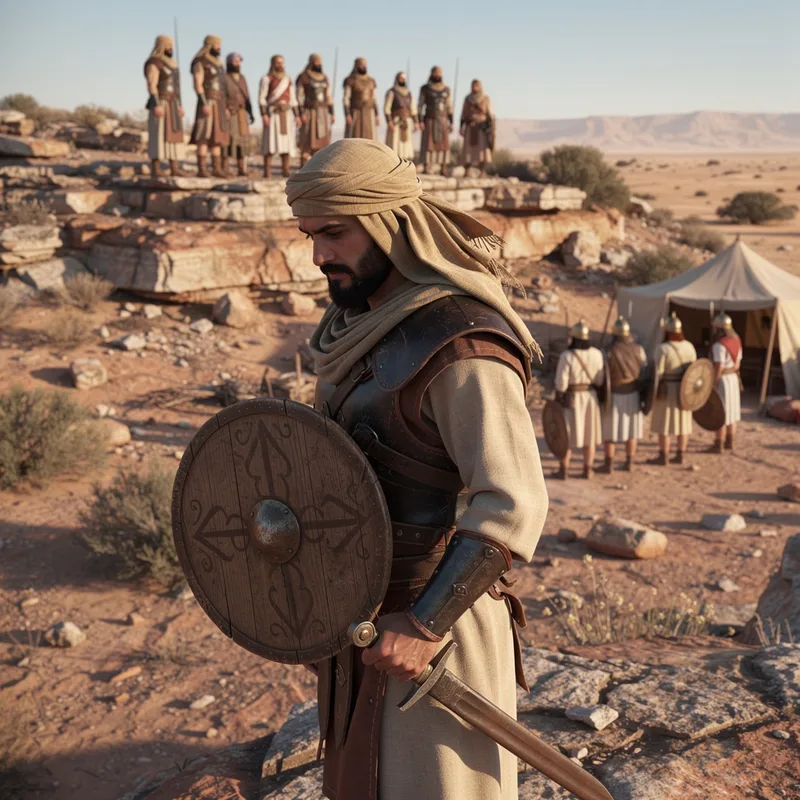
- Amalekite raiders
Examples
-
The Amalekite raiders attacked the village at dawn, catching everyone by surprise.
-
An Amalekite came into David's camp, bearing news of Israel's defeat.
Fiction book (2001) -
I replied, "I am an Amalekite."
Fiction book (2001) -
On the way back to camp, some of the men argued over the share of spoils they'd taken from the Amalekite camp.
Fiction book (2001) -
Amalekite raiders were charging into the camp while women fled in a dozen directions, grabbing their children as they ran.
Fiction book (2001) -
The Amalekite smiled broadly, triumphant, as he offered David Saul's crown.
Fiction book (2001) -
An Amalekite warrior challenged the Israelites to battle near the river.
-
The Amalekite tribe is known for its long-standing enmity with the Israelites.
Surface Forms
Morphology
Amalekite = Amalek (transparent) = Amalek + ite
The noun is a standard demonymic formation from 'Amalek' with the suffix '-ite', meaning 'a member of the Amalekites'.
Etymology
Amalekite names a member of an old people in the Bible. It comes from the ancestor name Amalek and the ending -ite, meaning 'descendant' or 'person of', the same ending in Israelite. So an Amalekite is a person who belongs to that ancient group.