
Alternanthera philoxeroides
- noun
- Specialized
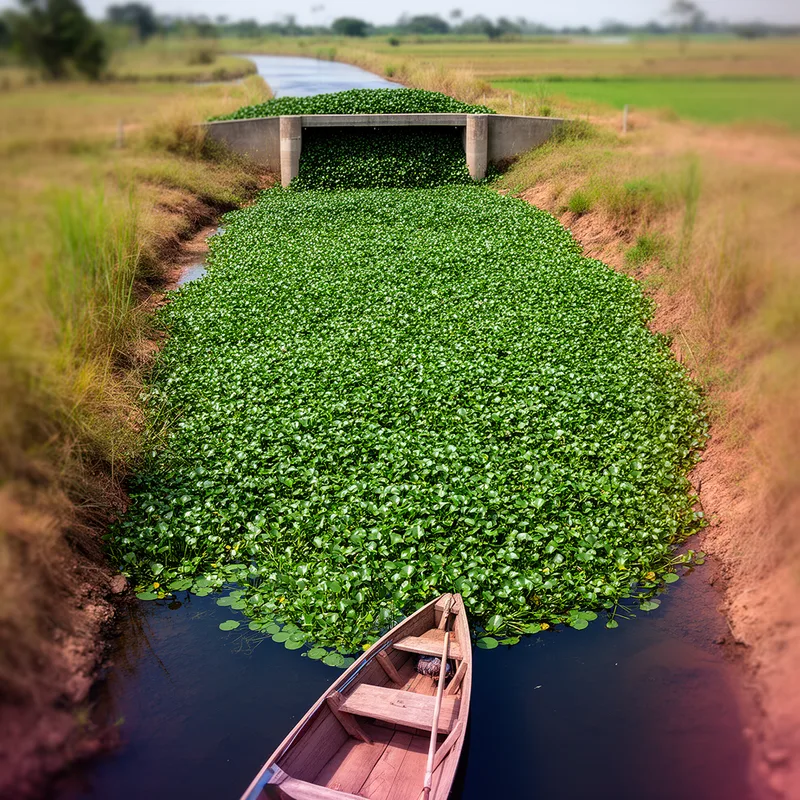
- The dense mats of Alternanthera philoxeroides can block sunlight and disrupt aquatic life in rivers.
Examples
-
The spread of Alternanthera philoxeroides has caused serious problems in local river systems.
-
Farmers struggle to control Alternanthera philoxeroides because it grows so quickly and densely.
-
Efforts to remove Alternanthera philoxeroides from lakes require ongoing monitoring and management.
-
Look at Alternanthera philoxeroides!
-
The Alternanthera philoxeroides spreads quickly.
-
Efforts to control the spread of Alternanthera philoxeroides in wetlands are crucial to maintaining local ecosystems.
-
To prevent flooding, city planners are concerned about the invasive nature of Alternanthera philoxeroides in waterways.
Synonyms

An aquatic plant from South America with long grasslike leaves that forms thick floating mats and clogs waterways

A fast-growing water plant with long grass-like leaves that forms thick floating mats
Surface Forms
Morphology
Alternanthera + philoxeroides
This is a Latin binomial scientific name: a genus plus a species epithet functioning as a proper noun. The species element ('philoxeroides') is not a known English word and the compound serves as a label rather than a compositional description, so a B1 learner who knows the constituents would not be able to derive the plant's meaning or properties. Scientific names are language-neutral labels and thus behave as opaque to typical learners.
Etymology
Alternanthera philoxeroides is a long scientific name made from older word parts; one easy picture is to split it into Alternanthera (which may suggest 'alternating flowers') and philoxeroides (which may suggest 'water-loving'). That picture helps you remember it is the fast-growing aquatic weed that forms dense mats and can block waterways.

