
Allionia incarnata
- noun
- Specialized
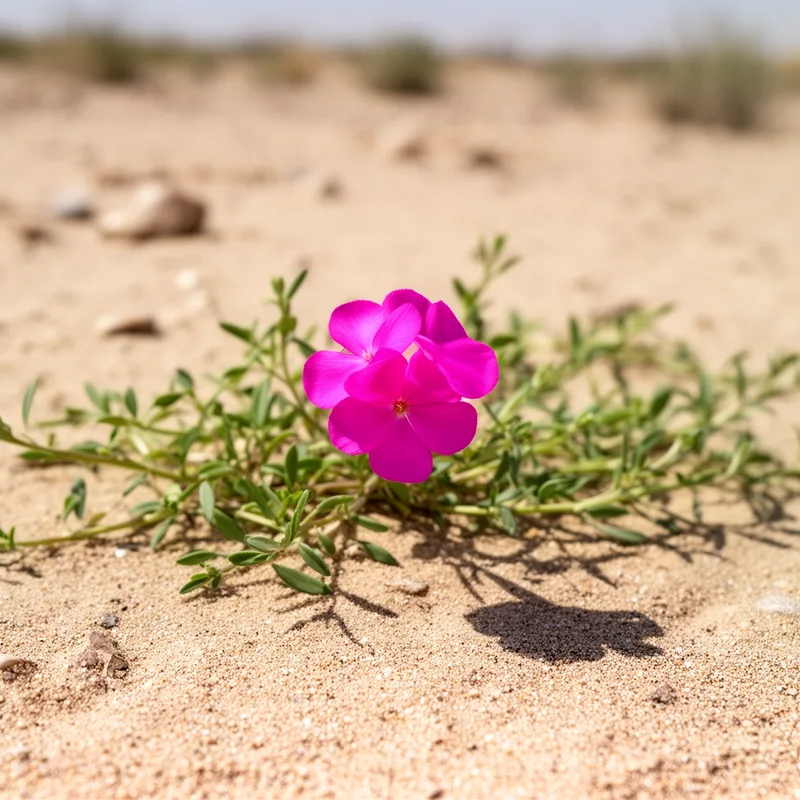
- Botanists admire Allionia incarnata for its unique floral structure, where three flowers appear fused into one.
Examples
-
The vibrant pink flowers of Allionia incarnata brighten the arid landscapes of the Southwest each spring.
-
Allionia incarnata is often called trailing windmills due to the shape of its blossoms.
-
The Allionia incarnata thrives in hot, dry climates.
-
Have you seen the Allionia incarnata blooming this season?
-
Allionia incarnata grows in sandy soils and attracts pollinators with its stunning clusters of pink flowers.
-
During the summer, the Allionia incarnata blanket the desert floor with vibrant pink blooms, providing a beautiful sight.
-
In arid regions, the Allionia incarnata is commonly found thriving alongside other drought-resistant plants.
Synonyms

A low plant with clusters of bright pink flowers near the ground

A low plant with groups of three deep pink flowers near the ground
Surface Forms
Morphology
Allionia + incarnata
This is a Latin binomial (scientific name) functioning as a taxonomic label rather than a compositional English phrase; knowing 'Allionia' as a plant genus and lacking a clear English meaning for 'incarnata' does not let a B1 learner derive the descriptive sense. Scientific names are arbitrary labels in everyday English and their meanings are not predictably compositional for typical learners, so the MWE is not transparently understandable.
Etymology
Allionia incarnata gets its name from an old word for colour: incarnata means 'flesh-coloured' because the flowers are deep pink. The three tiny flowers grow together so they look like one small bloom on a trailing stem, so the name fits this low plant with pink flowers.

