
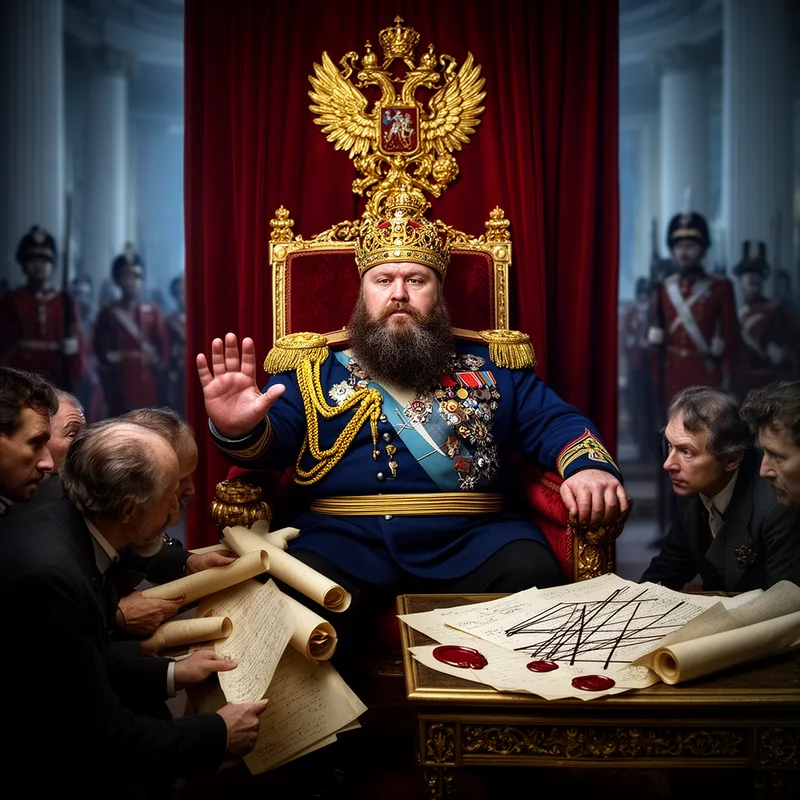
Alexander III


 1
8.6
- proper noun
- Emperor Alexander III ruled Russia with an iron fist.
Examples
-
The reign of Alexander III was marked by political repression and increased censorship.
-
Unlike his reformist father, Alexander III reversed many liberal policies in the Russian Empire.
-
Alexander III implemented strict policies to maintain autocratic rule in Russia.
-
Did Alexander III support any political reforms during his reign?
-
Emperor Alexander III ruled Russia with a firm hand, opposing significant political changes during his reign.
-
The policies of Alexander III were characterized by a strong emphasis on autocracy and national unity.
-
Born as the son of Alexander II, Alexander III became emperor in 1881, continuing his father's conservative legacy.
Synonyms
 1
9.1
A ruler of Russia from 1881 to 1894 who was known for strict traditional policies
Surface Forms
Morphology
The form is transparently compositional: 'Alexander' is a proper name and 'III' is the Roman numeral for three, so a learner who knows both constituents will understand this denotes 'Alexander the Third' — i.e. a particular person (typically a ruler) with that regnal number. The specific historical facts (Emperor of Russia 1881–1894) are not derivable from the parts, but the basic referential meaning is directly predictable and cross-linguistically recognizable.
Etymology
Alexander III was the third Russian emperor named Alexander and the son of Alexander II. He ruled strictly and stopped many of his father's changes, so his name often stands for 'strict rule' and being against change.