
Ailuropodidae
- noun
- /ˌaɪlʊrəˈpɒdɪdi/
- Specialized
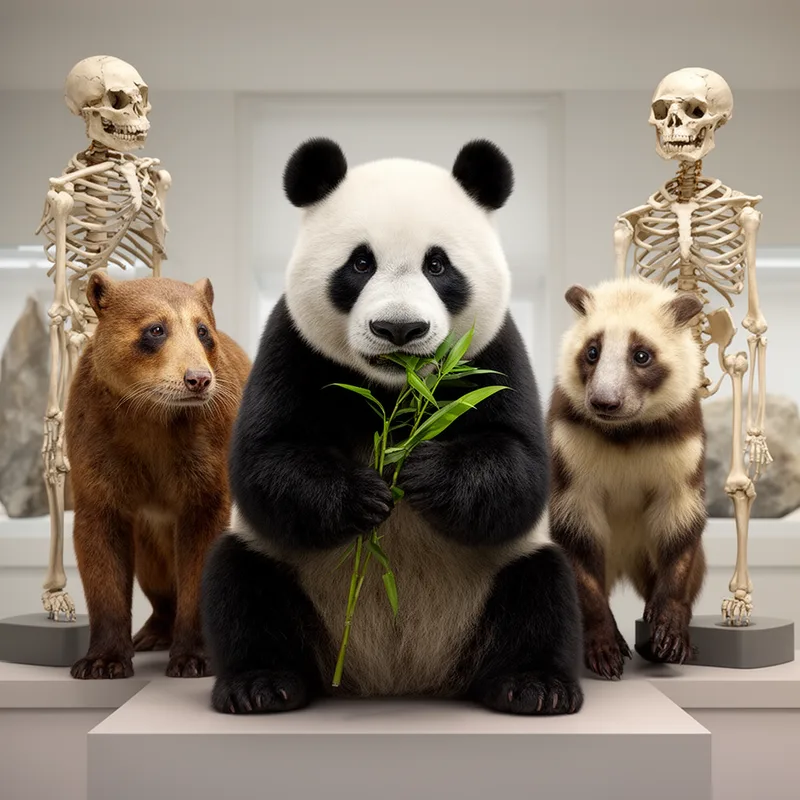
- The Ailuropodidae family includes the giant panda.
Examples
-
Some taxonomists classify the giant panda in its own family, Ailuropodidae, instead of grouping it with bears.
-
The Ailuropodidae are often recognized as a distinct family due to the unique characteristics of giant pandas.
-
Research on the evolutionary history of Ailuropodidae has provided insight into panda adaptations.
-
Did you know that Ailuropodidae are often called bear cats?
-
The family of mammals known as Ailuropodidae is famous for including the giant panda.
-
Scientists study Ailuropodidae to understand the evolution and behavior of giant pandas.
-
Many people may not realize that Ailuropodidae includes both living and extinct species related to the giant panda.
Surface Forms
Morphology
Ailuropodidae = Ailuropoda (opaque) = Ailuropoda + idae
Formation from a genus name using the standard zoological family suffix '-idae' is morphologically regular, but it requires taxonomic knowledge and the genus name is not interpretable to general learners.
Etymology
Ailuropodidae comes from Greek parts: ailuro- meaning 'cat' and -pod- meaning 'foot', with the animal family ending -idae. So it literally suggests a 'cat-foot family' and is the scientific family name for the giant panda and its relatives. A helpful memory trick is that -pod- is the same 'foot' seen in words like octopus, which makes the 'foot' part easier to remember.

