
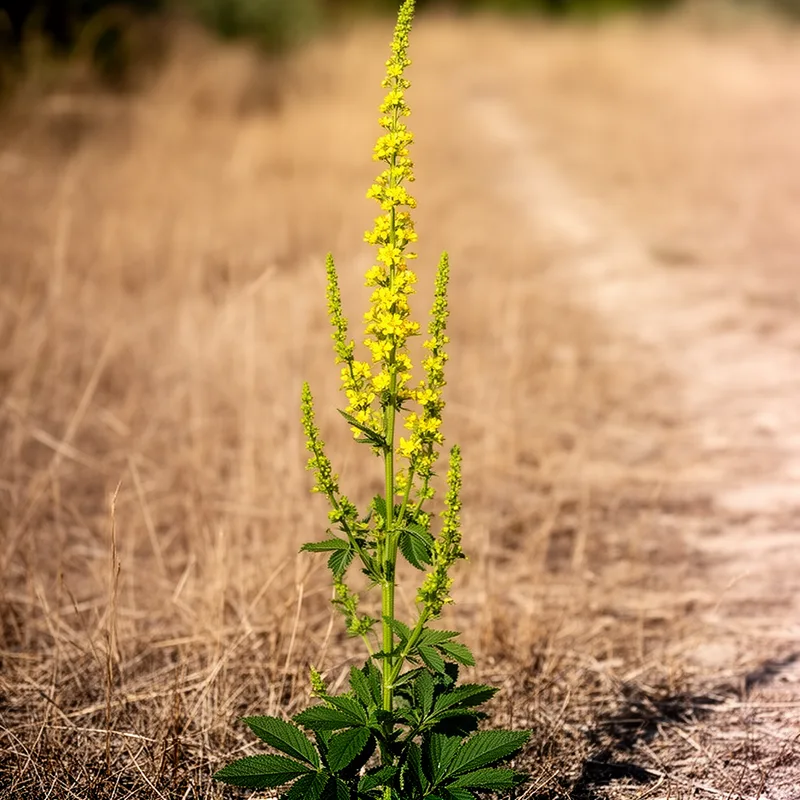
Agrimonia eupatoria
- noun
- Specialized
- The delicate yellow flowers of Agrimonia eupatoria bloom from early summer through autumn.
Examples
-
Agrimonia eupatoria is often found growing along hedgerows and dry roadsides across Europe.
-
Herbalists have long used extracts from Agrimonia eupatoria in traditional remedies.
-
Agrimonia eupatoria is often used in herbal medicine.
-
The leaves of Agrimonia eupatoria are known for their healing properties.
-
Agrimonia eupatoria is commonly found in sunny, dry meadows throughout Europe.
-
In many gardens, Agrimonia eupatoria attracts butterflies with its vibrant yellow blooms.
-
Botanists study Agrimonia eupatoria for its unique growing habits in natural habitats.
Synonyms


 1
9.9
1
9.9
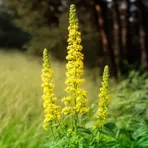
A plant with small yellow flowers that grows in fields and woods
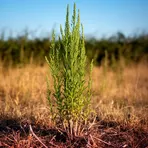
An upright plant that lives for many years and grows in dry grassy places
Surface Forms
Morphology
agrimonia + eupatoria
This is a Latin binomial (genus + species) and functions as a scientific name rather than a compositional English phrase. The species epithet 'eupatoria' is not a regular English word and provides no transparent semantic cue, so knowing 'agrimonia' (the genus) would not let a B1 learner derive the full meaning without botanical/taxonomic knowledge.
Etymology
Agrimonia eupatoria may come from two old ideas: the first name Agrimonia comes from a word for 'field' because the plant grows in dry, grassy places, and the second name eupatoria may come from an old king called Eupator who used it as 'medicine'. So the name is a handy memory: a wild herb often used for simple remedies.