
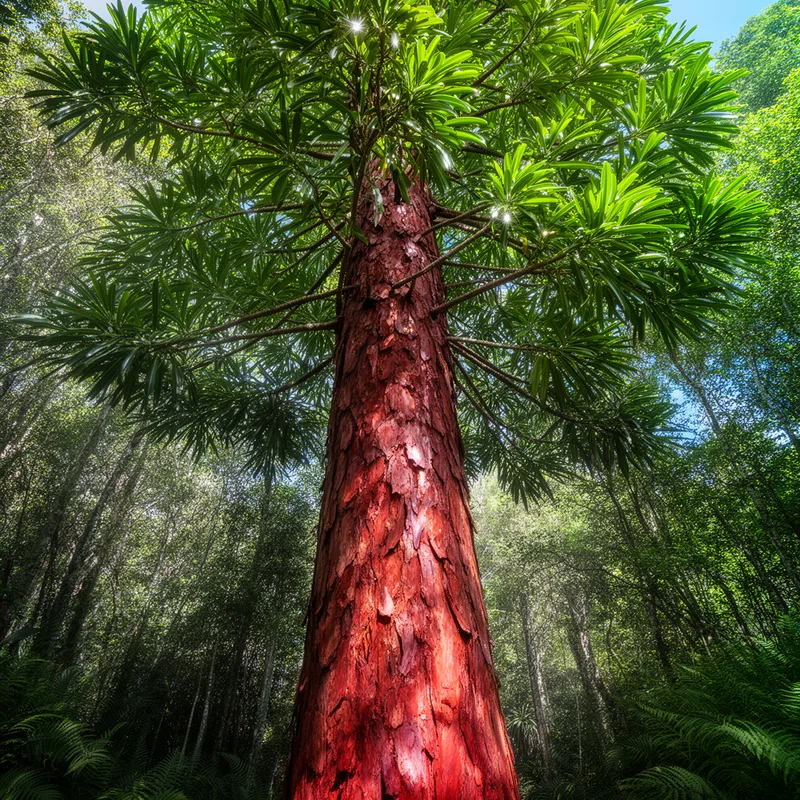
Agathis lanceolata
- noun
- Specialized
- The glossy leaves of Agathis lanceolata make it easy to distinguish from other native trees.
Examples
-
The forest reserve is home to the majestic Agathis lanceolata, a rare and ancient conifer.
-
Many visitors admire the Agathis lanceolata in the botanical gardens.
-
Researchers studied the growth patterns of Agathis lanceolata to understand its ecological role.
-
The Agathis lanceolata is known for its impressive height.
-
The forest reserve is home to the majestic Agathis lanceolata, a rare and ancient conifer.
-
Researchers studied the growth patterns of Agathis lanceolata to understand its ecological role.
-
Many visitors admire the Agathis lanceolata in the botanical gardens.
Surface Forms
Morphology
Agathis + lanceolata
This is a Latin binomial (scientific) name rather than a compositional English phrase; its constituents are taxonomic/Latin or absent from common dictionaries, so a B1 learner who knows ordinary English words would not be able to derive that it denotes a particular tree species. While 'lanceolata' is related to the botanical term 'lanceolate' (spear-shaped), that is specialized vocabulary and not predictable for an average B1 learner, making the expression non-compositional for them.
Etymology
Agathis lanceolata may come from older words that describe the tree: Agathis was used for large evergreen trees and lanceolata means 'lance-shaped', because the leaves are long and pointed. So the name helps you picture a big tree with long, shiny, spear-like leaves, which makes the species easier to remember.

