
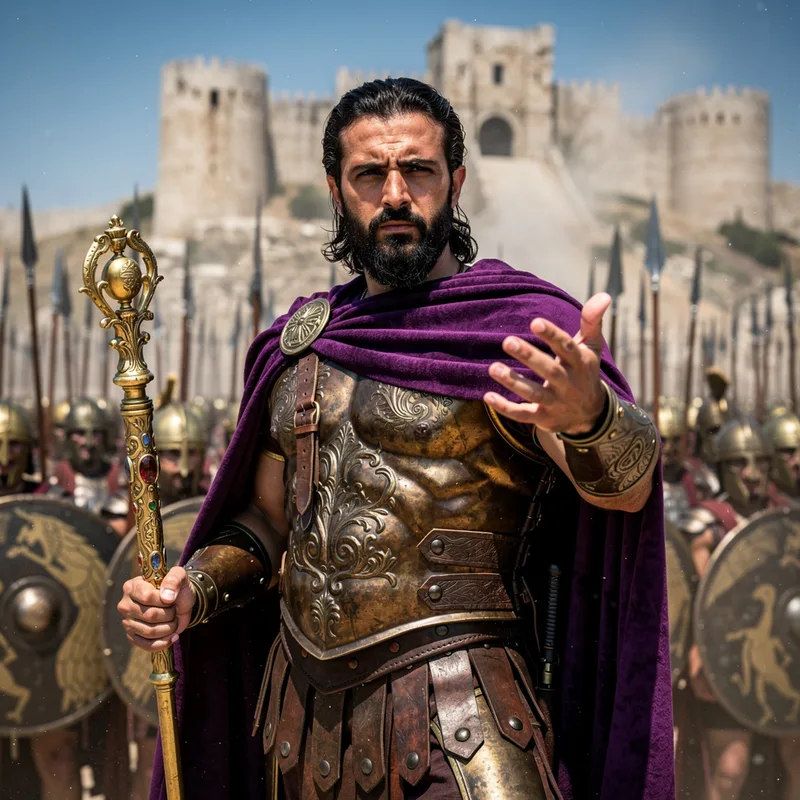
Agamemnon
 12
9.9

- proper noun
- /ˌæɡəˈmɛnɒn/
- Literature
- In Greek mythology, Agamemnon was the king of Mycenae who led the Greeks in the Trojan War.
- Agamemnon the king
- Agamemnon's sacrifice
- to kill Agamemnon
Loading YouTube…
Watch on YouTubeSo Agamemnon, let me start this off by presenting my personal opinion on this famous Greek hero, this guy.
- So Agamemnon, let me start this off by presenting my personal opinion on this famous Greek hero, this guy.
- He represents the order of Agamemnon and the commanders at Troy.
- So if he wanted to go after Agamemnon, he could have done that.
- And they get extremely angry at at Menelaus and Agamemnon and at Odysseus.
Examples
-
Begin where they first quarreled, Agamemnon, the King of men, and great Achilles.
Fiction book (2001) -
Agamemnon sacrificed his own child to appease Artemis and eventually was murdered by Clytemnestra in revenge.
Academic text (2006) -
So, really, Agamemnon had no choice...
-
And since it was Agamemnon, it probably really was great.
Fiction book (1992) -
Agamemnon calls you for a war council.
-
And at this point in the choreography, Agamemnon has just returned from Troy, full of pride in his triumph.
-
But the Greek army's leader, King Agamemnon, had grown jealous of Achilles and seized Bresais for himself.
-
Aeschylus expresses this brutal constraint in Agamemnon, the first play of the trilogy, with imagery that confounds past, present, and future.
Academic text (2006) -
During the Trojan War, Agamemnon made crucial decisions that shaped the fate of the Greek army.
-
The tragic story of Agamemnon is explored in many ancient Greek plays and myths.
Surface Forms
Etymology
Agamemnon is a Greek name that one idea says breaks into aga- meaning 'very' and -memnon meaning 'steadfast' or 'enduring'. So the name gives the image of a strong, lasting leader, which fits the king who led the Greeks in the Trojan War.