
Aeneas
 2
9.9

- proper noun
- /əˈniːəs/
- Literature
- As the protagonist of the Aeneid, Aeneas embarks on a journey to fulfill his destiny of founding Rome.
- Aeneas and Dido
- Aeneas prays to Venus
- Aeneas's founding of Rome
Examples
-
Turnus vows one-on-one combat with Aeneas to avenge the slight and to settle the war between the Trojans and Latins.
Academic text (2017) -
Act three opens with Aeneas deeply troubled over the mixed signals he has been getting from the gods.
Academic text (2000) -
Turnus and Aeneas meet in the final battle of the Aeneid.
Academic text (2017) -
Their colossal brawl is initially even, but Aeneas soon gains the upper hand.
Academic text (2017) -
Indeed, those with the closest ties to Roman history, like Romulus and Aeneas, are exceedingly rare.
Academic text (2012) -
Berlioz's epic masterpiece tells the story of Aeneas, the legendary Trojan hero, after the sack of Troy.
-
Disarmed and pursued by Aeneas, Turnus overestimates his remaining strength and attempts to hurl an enormous boulder at Aeneas.
Academic text (2017) -
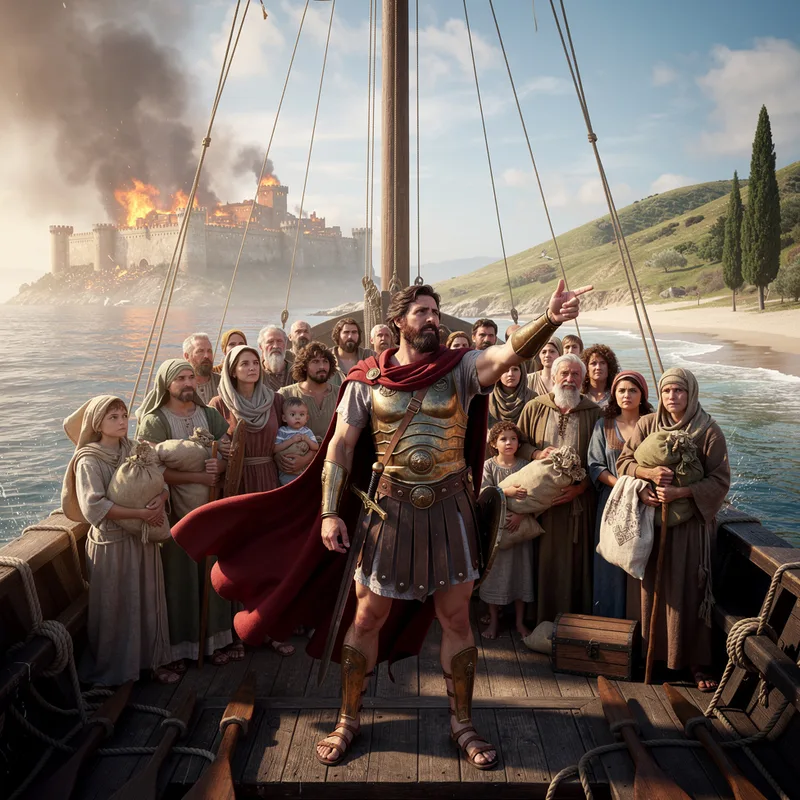
In Virgil's epic, Aeneas escapes the burning city of Troy with his loyal followers.
-
Legend has it that Aeneas, the son of Aphrodite, played a key role in the mythology surrounding the Trojan War.
Surface Forms
Etymology
Aeneas is an old Greek name made famous by Virgil's poem the Aeneid, which tells the story of a Trojan hero and leader who travels to Italy. Because the poem shows Aeneas guiding survivors and helping to start a new people, his name is remembered as a 'leader' and a 'founder'.