

Actinidia arguta
- noun
- Specialized
- The Actinidia arguta vine produces small, smooth-skinned fruits that are sweet and edible.
Examples
-
Gardeners often plant Actinidia arguta for its cold-hardy, high-yielding kiwis.
-
The Actinidia arguta is often grown in gardens for its delicious fruit.
-
Researchers are studying Actinidia arguta for its potential health benefits and unique taste.
-
Have you ever tried the fruit of the Actinidia arguta?
-
Gardeners often plant Actinidia arguta for its cold-hardy, high-yielding kiwis.
-
The Actinidia arguta vine produces small, smooth-skinned fruits that are sweet and edible.
-
Have you ever tried the fruit of the Actinidia arguta?
Synonyms

A climbing Asian vine with long saw-like leaves, white flower clusters, and greenish yellow fruit you can eat
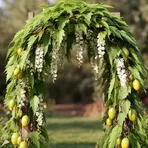
A climbing Asian vine with long jagged leaves and white flower bunches that make small edible greenish-yellow fruit
Surface Forms
Morphology
Actinidia + arguta
This is a Latin binomial: knowing 'Actinidia' (a genus of vines producing kiwifruit) lets a learner predict this is a particular species of that vine, but the species epithet 'arguta' is a technical/Latin label that does not transparently add the full descriptive meaning to a B1 learner. Binomial names are used across languages so the pattern partly signals 'a type of Actinidia', but the precise descriptive sense (hardy kiwi, serrated leaves, etc.) is not fully derivable without botanical or Latin knowledge.
Etymology
Actinidia arguta is a scientific name for the hardy kiwi. The first part, Actinidia, may come from a Greek word for 'ray' because the flower parts spread out like rays. The second part, arguta, comes from Latin for 'finely toothed', which fits the plant's small, toothed leaves, so the name helps you remember this cold-hardy vine and its little edible fruit.

