
Acacia auriculiformis
- noun
- Specialized
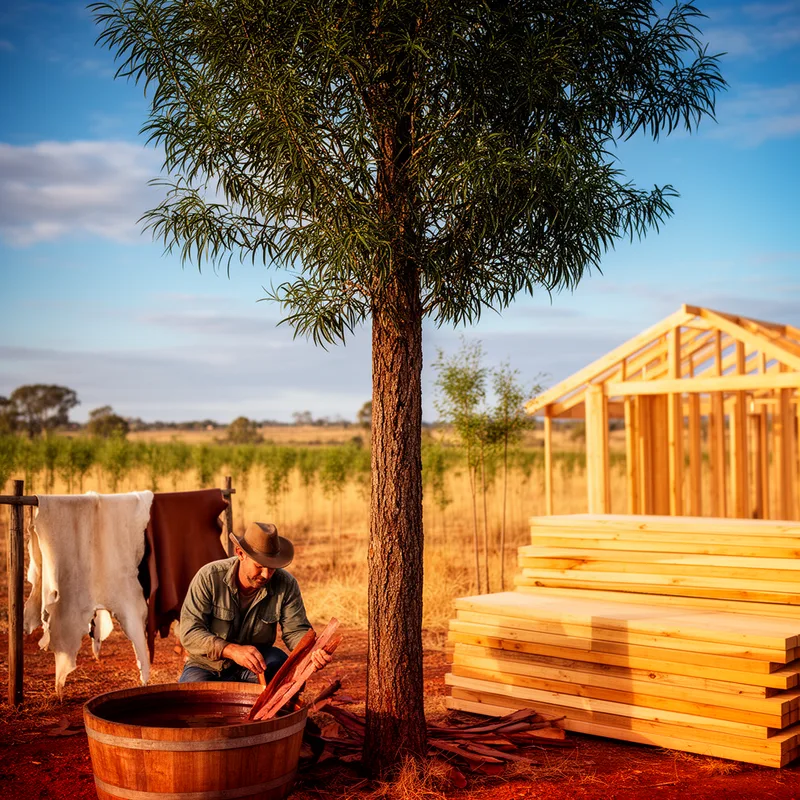
- The bark of Acacia auriculiformis is commonly used in leather tanning industries.
Examples
-
In Australia, Acacia auriculiformis is valued for both its wood and its fast growth.
-
Many parks feature the Acacia auriculiformis for its beautiful foliage.
-
Farmers planted rows of Acacia auriculiformis to prevent soil erosion on their land.
-
The Acacia auriculiformis is native to Australia.
-
The bark of Acacia auriculiformis is commonly used in the tanning process to prepare animal hides.
-
Farmers planted rows of Acacia auriculiformis to provide shade for their livestock and improve land stability.
-
In Australia, Acacia auriculiformis is valued not only for its wood but also for its significance in the tanning industry.
Surface Forms
Morphology
Acacia + auriculiformis
This is a botanical binomial: 'Acacia' transparently identifies the genus so a learner can infer it names a type of Acacia. However, 'auriculiformis' is a Latin specific epithet not glossed here and would be unfamiliar to a B1 learner, so the descriptive sense and specialized information (e.g., ear-shaped feature or uses in tanning) cannot be fully derived without botanical/Latin knowledge, making the term only partially transparent.
Etymology
Acacia auriculiformis comes from two name parts: Acacia, an old word for 'thorn', and auriculiformis, meaning 'ear-shaped', because the tree has small, ear-like leaves. Its bark is used to tan leather and the tree grows fast, so the name helps you picture a thorny, ear-shaped-leaf tree valued for tanning, wood, and stopping soil erosion.

