
Abbasid


 1
9.9
- adjective
- /ˈæbəsɪd/
- Thus, with the foundation of the Abbasid dynasty, the ethnic social classes of the Sasanid empire were revived within an Islamic framework.
- Abbasid dynasty
- Abbasid period
- Abbasid Caliphate
Examples
-
The findings only hint at the high volume of maritime trade between Abbasid Iraq and Tang China.
Blog text (27) -
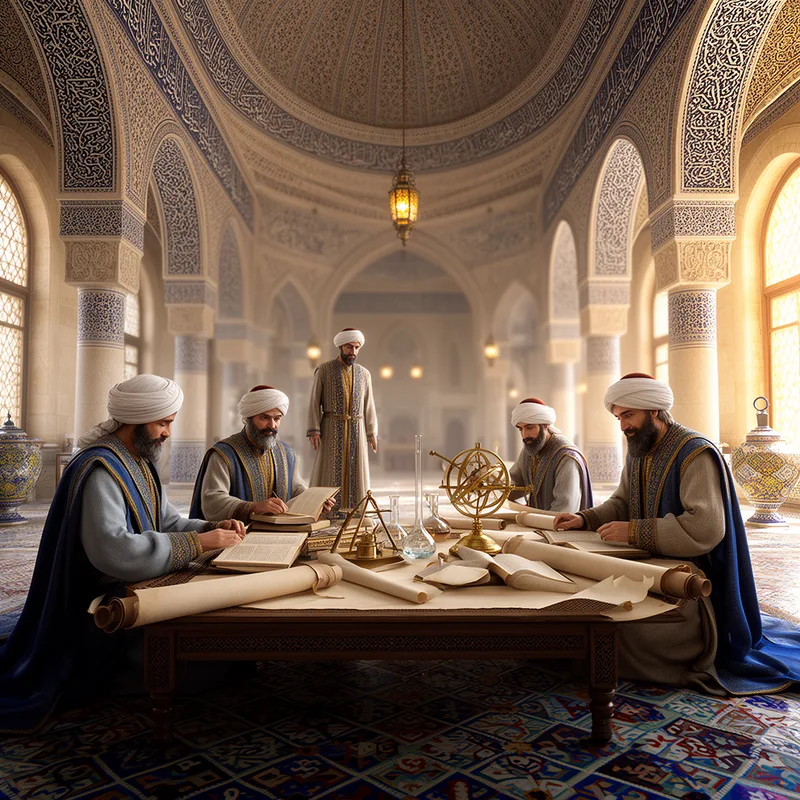
Educational standards during the Abbasid era were high.
Academic text (2004) -
The first Abbasid century saw an even greater expansion of commerce.
Academic text (1994) -
Instead of traditional Abbasid black, Al Mamoun's court began to wear green, a color associated with the Alids.
-
Translation into Arabic also led Arabic literature to flourish and be more widely disseminated during the early Abbasid period.
Academic text (1994) -
The golden age of classical Islamic civilization was realized under the Abbasid Dynasty, who founded Baghdad as their capital in A.D. 762.
Academic text (2004) -
As the Abbasid caliphate weakened, minor dynasties rose to dominate regionally throughout the greater Islamic empire.
Academic text (2008) -
Adab in the Abbasid caliphate meant urbane cultural sophistication understood in contrast to the primitive culture of the Bedouin.
Blog text (18) -
The Abbasid elite also began to reflect a similarly diversified background: merchants, shopkeepers, artisans, and the land-owning aristocracy.
Academic text (1994) -
The Abbasid dynasty is renowned for its contributions to science and philosophy during its rule.
Surface Forms
Morphology
Abbasid = Abbas (transparent) = Abbas + id
Formed directly from the proper name 'Abbas' plus the suffix '‑id' indicating relation or descent, so a learner who knows 'Abbas' can infer the relation.
Etymology
Abbasid comes from the Arabic name Abbas and originally meant 'of the family of Abbas', who was the Prophet Muhammad's uncle. So, something described as Abbasid is connected to that dynasty, its culture, art, or administration.