
AR
 20
5.1
20
5.1

- noun
- /ˌeɪˈɑr/
- Specialized
- Many mobile games now use AR to create interactive experiences for players.
- AR requirement
- AR program
- AR model
Loading YouTube…
Watch on YouTubeAnd I wanted to get an AR augmented reality projector.
- And I wanted to get an AR augmented reality projector.
- And the word that normal people use for that isn't VR or AR or spatial computing.
- Everybody's so ready for AI and AR and blockchain and so many other things.
- OK, so this is my AR emoji.
- Where is your attention in a altruistic kind of future world of AR and VR?
- So this is me moving my face around as an AR emoji.
Examples
-
The purpose of AR is to enhance an individual's physical and visual environments.
Academic text (2012) -
The possibility exists for AR to provide a more holistic approach to technology education.
Academic text (2012) -
In my opinion Sky guide is the best AR app.
-
This is going to enhance your AR experiences.
-
Though the statistics of each school are very similar, the administration of the AR program was slightly different.
Academic text (2012) -
The potential is there for AR to become a major component of training and development.
Academic text (2012) -
Through the use of AR, many new potential student benefits targeting visual and spatial applications exist.
Academic text (2012) -
For example, an animation class could use AR to establish an object's spatial relationship to other components or the environment.
Academic text (2012) -
Initially, AR could be incorporated into the classroom as a supplemental learning tool.
Academic text (2012) -
Samsung's leaked concept videos may show its vision for AR glasses.
Synonyms


 1
7.9
1
7.9
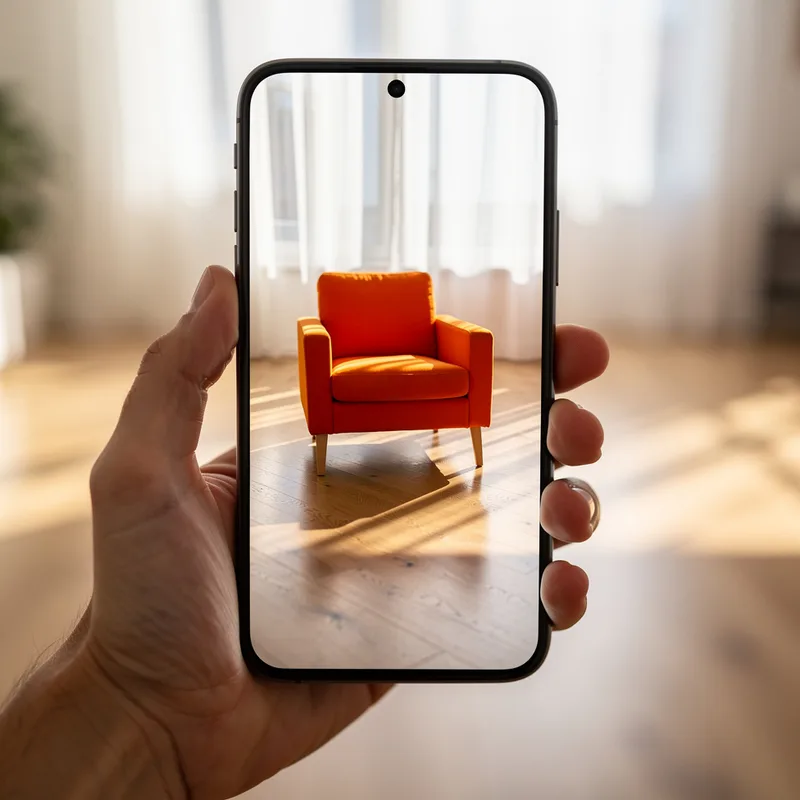
Technology that overlays digital images on the real world using a phone or headset
How Immersive

Surface Forms
Morphology
Etymology
AR stands for augmented reality, where augmented means 'added to' and reality means the 'real world', so AR is technology that puts digital images or information on top of what you actually see.