

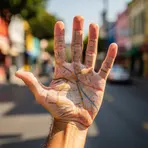
the back of one's hand
 10
6.0
10
6.0

- idiom
- I know this town like the back of my hand.
- know like the back of one's hand
- place like the back of one's hand
- streets like the back of one's hand
Examples
-
I know this country like the back of my hand.
-
I know these roads like the back of my hand.
-
I know this place like the back of my hand.
-
I know these streets like the back of my hand.
-
I know this territory like the back of my hand.
-
I know these mountains like the back of my hand.
-
I know this alley like the back of my hand.
-
I know Ohio like the back of my hand.
Blog text (11) -
I know the clutter in that room like the back of my hand.
Blog text (19) -
I know this town like the back of my hand.
Synonyms
 ∞
1.0
∞
1.0
To be familiar with someone, something, or a place from before
 29
4.8
29
4.8
Can find things and use a place or topic easily
 16
4.2
16
4.2
To understand something well enough to deal with it
 12
5.4
12
5.4
Know a place or thing very well because you have seen it many times

To know something very well and do it easily

To have a lot of skill and information about a subject
Antonyms


How Familiar
10
6.0

- Informal
15
6.7
476
2.8

 1
3.9
∞
2.7
104
4.4
1
3.9
∞
2.7
104
4.4
Surface Forms
Morphology
The phrase literally names a body part ('back' + 'hand') and does not transparently convey the sense of thorough knowledge; the idiomatic meaning 'to know something extremely well' cannot be predicted from the constituent words alone. While some languages use comparable body‑part metaphors for familiarity, the metaphorical shift is language-specific enough that a B1 learner who knows the words would not reliably infer the idiomatic meaning without prior exposure.
Etymology
The back of one's hand comes from the simple idea that you see and touch the back of your hand every day, so you know its lines and marks very well. That's why it means 'to know something very well'.