

porter's beer
- noun
- /ˈpɔrtərz bɪr/
- Do you prefer porter's beers or stouts?
Examples
-
I love a cold porter's beer after work.
-
He ordered a pint of porter's beer to enjoy with his dinner.
-
The brewery is famous for its traditional porter's beer recipe.
-
With its roasted flavors and dark color, porter's beer is popular among craft beer enthusiasts.
-
I enjoyed a rich glass of porter's beer while relaxing by the fireplace.
-
At the brewery, we sampled several varieties, and I particularly loved the deep flavor of the porter's beer.
-
After dinner, we shared a bottle of porter's beer, enjoying its sweet and roasted notes.
Synonyms

 178
8.7
178
8.7

A strong dark beer from the town of Burton upon Trent
 45
4.9
45
4.9
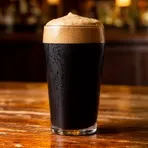
A dark, sweet beer made from roasted barley with a rich taste
 9
5.0
9
5.0
A very dark, strong beer with a rich taste

A dark, strong beer from countries near the Baltic Sea that is made in cool conditions and tastes rich
How Strong


Surface Forms
Morphology
porter's + beer
The beer style meaning is not derivable from the constituents: a B1 learner who knows 'porter' only as a person who carries luggage plus 'beer' would likely interpret it as beer belonging to a porter, not a dark ale. 'Porter' as a historical, lexicalized beer type is culture-specific and must be learned as an item rather than composed from its parts.
Etymology
Porter's beer may come from the workers called porters in old London, who carried heavy loads and often drank a dark, strong beer to stay warm and full. Because these porters liked that roasty, heavy drink, the name came to mean the dark, rich beer we now call 'a very dark, sweet ale'.