
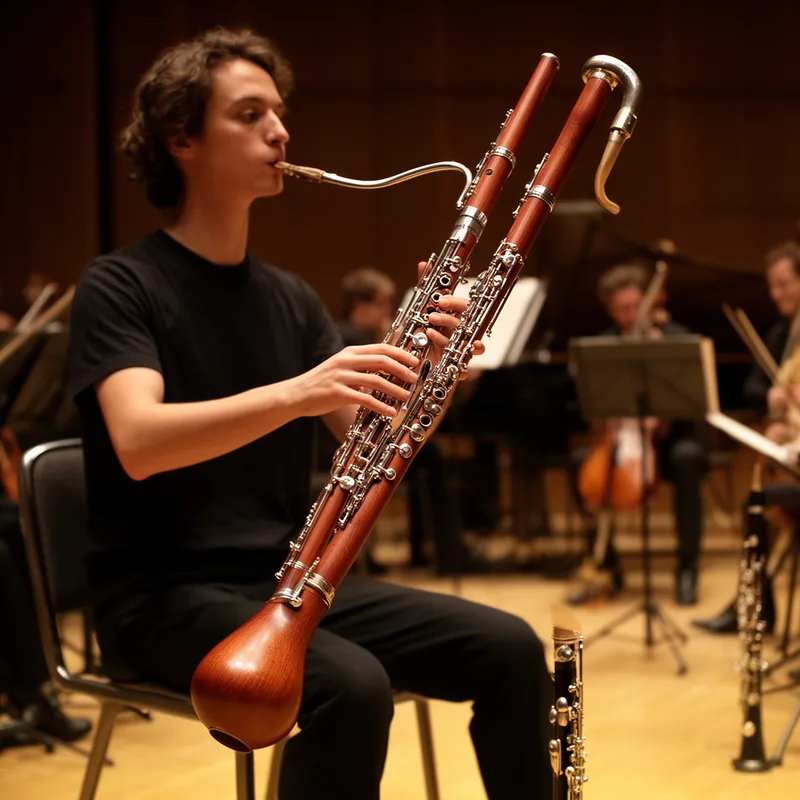
oboe d'amore
- noun
- /oʊˈboʊ dɑːˈmɔːr/
- Specialized
- The concerto was written specifically for the oboe d'amore, giving it a warm and mellow tone.
Examples
-
She played a solo on the oboe d'amore during the orchestral performance.
-
Many composers wrote for the oboe d'amore in the baroque period.
-
Baroque composers often featured the oboe d'amore for its distinct timbre.
-
The oboe d'amore has a warm and rich tone.
-
Baroque composers often featured the oboe d'amore for its distinct timbre.
-
The concerto was written specifically for the oboe d'amore, giving it a warm and mellow tone.
-
She played a solo on the oboe d'amore during the orchestral performance.
How High
 5
7.5
5
7.5

 75
1.5
13
5.0
75
1.5
13
5.0
- Specialized

 1
6.1
8
7.4
1
6.1
8
7.4
Surface Forms
Morphology
oboe + d'amore
The noun 'oboe' makes it clear this is a type/kind of instrument, so a learner could infer it names a particular oboe. However 'd'amore' is an Italian prepositional phrase ('of love') not likely known to a B1 learner and does not transparently convey the specific acoustic fact (pitched a minor third lower, Baroque use). Because the phrase signals a subtype but requires cross-linguistic or specialist knowledge for the precise meaning, it is only partially predictable.
Etymology
Oboe d'amore comes from Italian: the word oboe names the instrument and d'amore means 'of love', a name given because of its warm, gentle sound. That's why the oboe d'amore refers to the lower, more mellow oboe often used in Baroque music.