

to make one's mark
- idiom
- Informal
- After years of hard work, she finally made her mark in the art world.
Examples
-
I need to make my mark.
-
As your mayor, your king and your friend, I shall depart as a new man, ready to make his mark on the world.
-
But I wanted to make my mark, too.
-
It's the only way I have to make my mark.
-
'I'm ready to make my mark on this band.'
-
I'm just a man trying to make his mark on history.
-
I started my junior year at Texas A&M the way most college students do: wondering how I'd make my mark on the world.
-
Prince Charles remains a king in waiting, ready to make his mark on the British monarchy.
-
If I don't make my mark soon, I could end up out of work.
-
You know, I haven't made my mark, I haven't really achieved what I wanted to do.
Synonyms

 30
3.7
30
3.7

To become known for what you do by working hard
 18
3.9
18
3.9
To have a lasting effect on a person or thing that people notice
 18
4.1
18
4.1
Become very successful in a job or career
 11
4.1
11
4.1
To get noticed for your work in an area, for example in art or business
 9
5.1
9
5.1
To become very successful, often quickly
 7
4.5
7
4.5
To become very successful and famous in your work
Antonyms


How Notable

Surface Forms
Morphology
The phrase literally combines 'make' (to create or cause), 'one's' (possessive), and 'mark' (an impression or notable sign), so a learner knowing these words can infer 'create a lasting impression' or achieve recognition. This compositional metaphor (leaving/making a mark) is common across languages and follows normal English patterns, making the meaning predictably derivable for a B1 learner.
Etymology
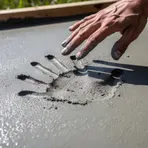
The idiom make one's mark comes from the old idea of leaving a real mark, like carving your initials or stamping your name on a building or paper to show you were there. If people saw that mark, you were noticed, so the phrase now means 'to achieve recognition or success'.