

hart's-tongue
- noun
- /hɑrtsˈtʌŋ/
- Gardeners sometimes plant hart's-tongue for its attractive, glossy foliage and tolerance of dense shade.
- hart's-tongue fern
Examples
-
The shady woodland was dotted with hart's-tongue growing among mossy rocks.
-
Botanists admired the unique appearance of the hart's-tongue fern during their field study.
-
The hart's-tongue fern thrives in shaded areas.
-
I found a beautiful hart's-tongue in the forest.
-
Gardeners often plant hart's-tongue because it thrives in shady spots and has beautiful fronds.
-
In the damp, cool forest, the hart's-tongue fern added a lush touch to the undergrowth.
-
The hart's-tongue features long, narrow leaves that stand out among the ferns in the garden.
Synonyms

A fern from Europe and Asia with long tongue-shaped leaves that grows in moist shade
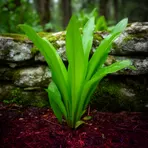
A fern with long green leaves shaped like a tongue that grows in damp places

A fern with long flat leathery leaves that grows in shade
Surface Forms
Morphology
Etymology
The word hart's-tongue comes from hart meaning 'deer' and the familiar word tongue meaning 'tongue'. Gardeners named the fern this because its long, flat leaves look like a deer's tongue, so the name helps you remember its shape.

