
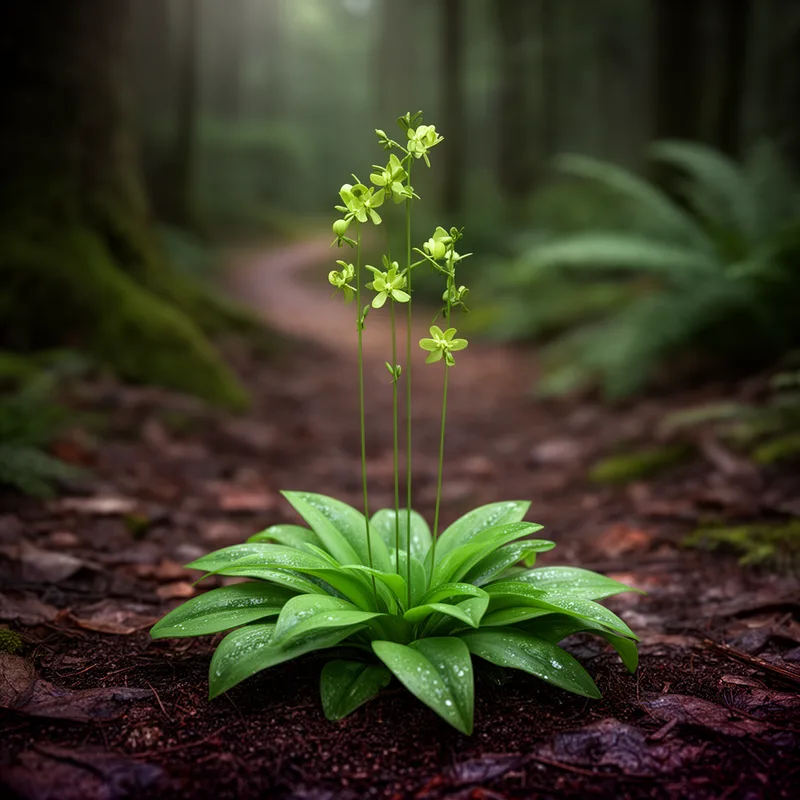
five-point bishop's cap
- noun
- US
- We discovered a five-point bishop's cap growing by the forest trail, its tiny green flowers just beginning to open.
Examples
-
The five-point bishop's cap thrives in moist, shaded woodland areas of California and the Pacific Northwest.
-
The five-point bishop's cap is known for its distinctive leaves and delicate flowers found in shaded forest areas.
-
Botanists classify the five-point bishop's cap as part of the forest understory flora in Colorado.
-
The five-point bishop's cap is a unique plant.
-
I saw a five-point bishop's cap in the garden.
-
During my hike in Colorado, I spotted a five-point bishop's cap nestled among the underbrush.
-
In California, the five-point bishop's cap flourishes along the forest floor, providing beauty in its subtle blooms.
Synonyms
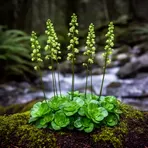
A small perennial plant with low leaf clusters and thin stems of tiny greenish flowers
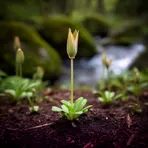
A small plant that lives for more than one year with a seed pod shaped like a bishop's hat
Surface Forms
Morphology
five-point + bishop's + cap
The phrase is compositionally descriptive: 'five-point' and 'bishop's cap' evoke a five-pointed cap shape, and 'cap' is a transparent noun. A B1 learner who knows the constituents would likely infer a five-pointed cap-like shape, but would not reliably infer that this is the conventional name of a specific small plant with clustered leaves and slender racemes. Because the phrase signals form by resemblance but requires lexical/conventional knowledge to identify the referent as a plant, it is only partially transparent.
Etymology
Five-point bishop's cap comes from how the plant looks: the leaves often form a low cluster with five points, and the small flower looks like a tiny bishop's cap, so that image explains why the name refers to this 'small plant' found in shady woods.

