
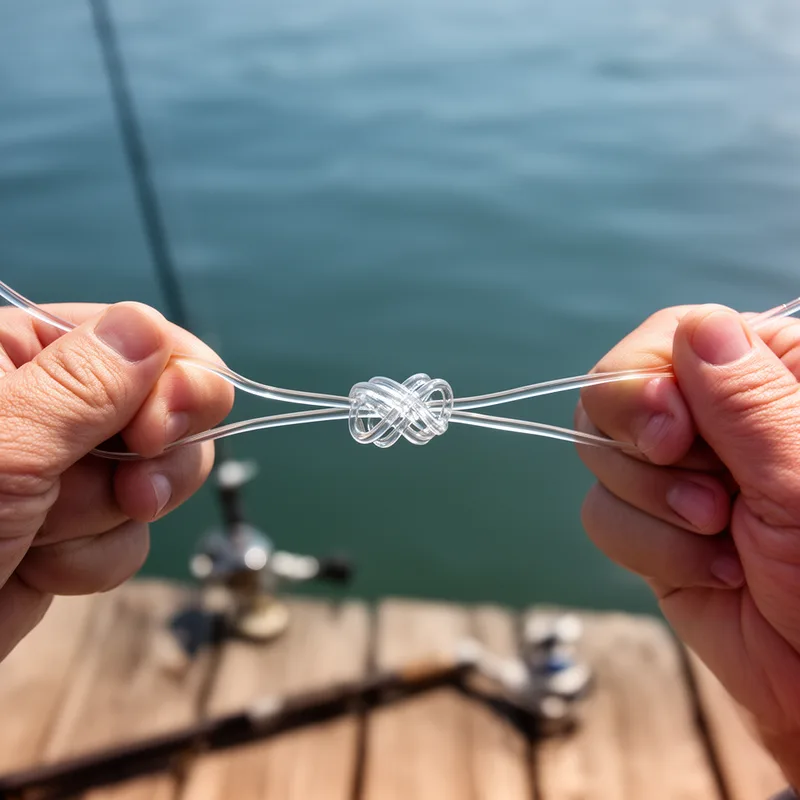
fisherman's knot


 1
6.1
1
6.1
- noun
- /ˈfɪʃərmənz nɑt/
- Specialized
- Many anglers prefer the strength of a fisherman's knot to keep their catches secure.
Examples
-
That question may have led an early angler to invent the double fisherman's knot.
Academic text (2009) -
If a design engineer had only asked, "Can the connection get tighter as the tube is pulled?" A double fisherman's knot.
Academic text (2009) -
The body had been tied up using a fisherman's knot known as the fly, a particularly painful knot that made the victim look like he was skydiving.
-
The precise way the body had been tied up using a fisherman's knot known as the fly, a particularly painful knot that made the victim look like he was skydiving.
-
The fisherman used a fisherman's knot to secure two fishing lines together tightly.
-
For better results, you should practice tying a fisherman's knot when preparing your tackle.
Synonyms
 95
1.0
95
1.0
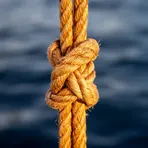
A fastening made by tying rope or string to hold things together
 1
8.6
1
8.6
A knot people who fish use to join two lines by wrapping the ends together
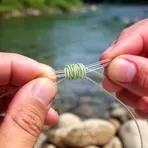
A strong knot for joining two fishing lines by wrapping their ends
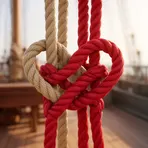
A way of joining two ropes used as a symbol of love

A knot used to join the ends of two ropes so they stay together

A strong knot for joining the ends of two thick ropes

A strong knot used to join the ends of two large ropes often on ships

A way of tying two rope ends by crossing them left then right to hold bandages or sails

A knot used to hold things together
How Secure
- Specialized
4
8.2

- Specialized
1
6.1
- Specialized
1
4.4
3
5.5
Surface Forms
Morphology
fisherman's + knot
The compound is directly compositional: 'fisherman' (a person who fishes) + 'knot' (a fastening), so a B1 learner who knows both words can infer it is a knot used by fishermen or for fishing lines. The possessive/compound pattern is a transparent, cross-linguistic way to name tools or techniques associated with an agent, so the meaning is immediately recoverable from the parts.
Etymology
Fisherman's knot comes from a simple fishing picture: fishermen tie a small knot in each of two thin lines and pull them together so the knots lock and the lines stay joined. That's why the name means 'a strong way to join the ends of two lines'.