
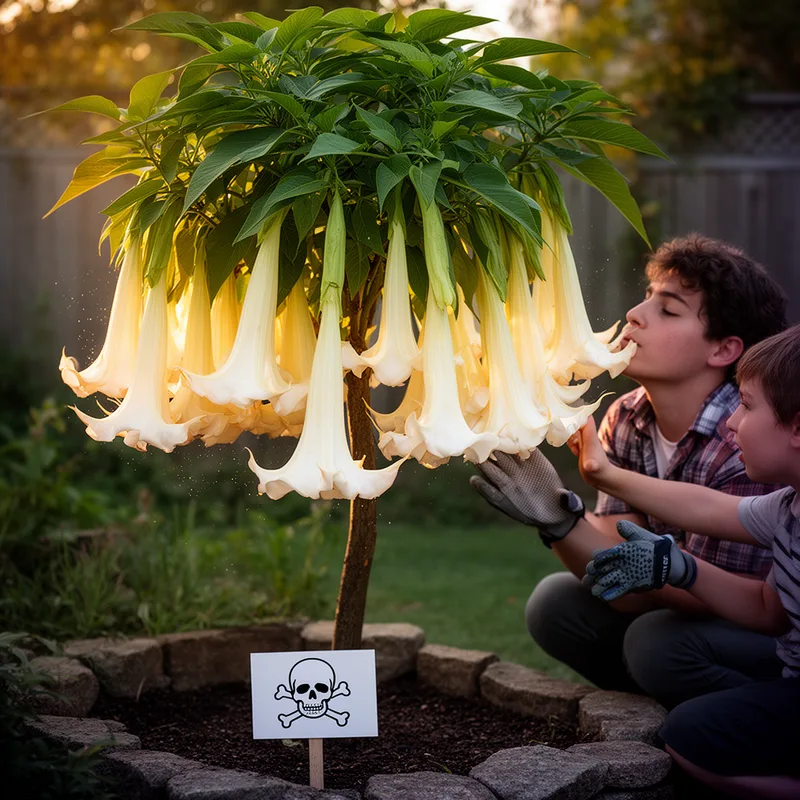
angel's trumpet
- noun
- /ˈeɪndʒəlz ˈtrʌmpɪt/
- Specialized
- The angel's trumpet blooms beautifully in the spring.
Examples
-
Be careful; all parts of the angel's trumpet plant are highly toxic if ingested.
-
She bought an angel's trumpet to add a dramatic touch to her backyard collection.
-
The garden was filled with the sweet scent of angel's trumpet blooming in the evening air.
-
Many gardeners love the angel's trumpets for their fragrance.
-
The angel's trumpet produces large, fragrant flowers that attract many pollinators.
-
Many gardeners choose to plant angel's trumpets in their yards for the beautiful blooms.
-
Be cautious around the angel's trumpet, as all parts of the plant are highly toxic if eaten.
Synonyms
A plant with large, trumpet-shaped hanging flowers often called angel's trumpet
A South American plant with very large trumpet-shaped flowers that have a strong sweet smell at night

A South American shrub or small tree with large fragrant, trumpet-shaped flowers

South American plant grown for large trumpet-shaped flowers that smell at night called angel's trumpet
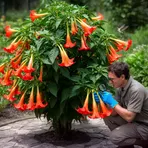
A South American shrub with large orange-red trumpet-shaped flowers that are poisonous
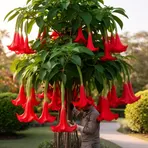
A South American bush with large red flowers shaped like trumpets
Surface Forms
Morphology
angel's + trumpet
The phrase transparently evokes a ‘trumpet’ associated with an ‘angel’, so a learner who knows both words can reasonably infer a trumpet-shaped or decorative object — and many languages use similar names for the Brugmansia plant (e.g. 'trompeta de ángel'), supporting a shape-based inference. However, the full lexical meaning (that it names a specific South American ornamental plant and that it is highly toxic) cannot be fully derived from the constituents, so the relation is only partially predictable.
Etymology
Angel's trumpet is named for its large, hanging flowers that look like long trumpets. One popular story says people imagined an angel blowing those trumpet-like blooms, and because the shape and strong night scent are so striking, the name came to mean this showy but 'poisonous' garden plant.

