
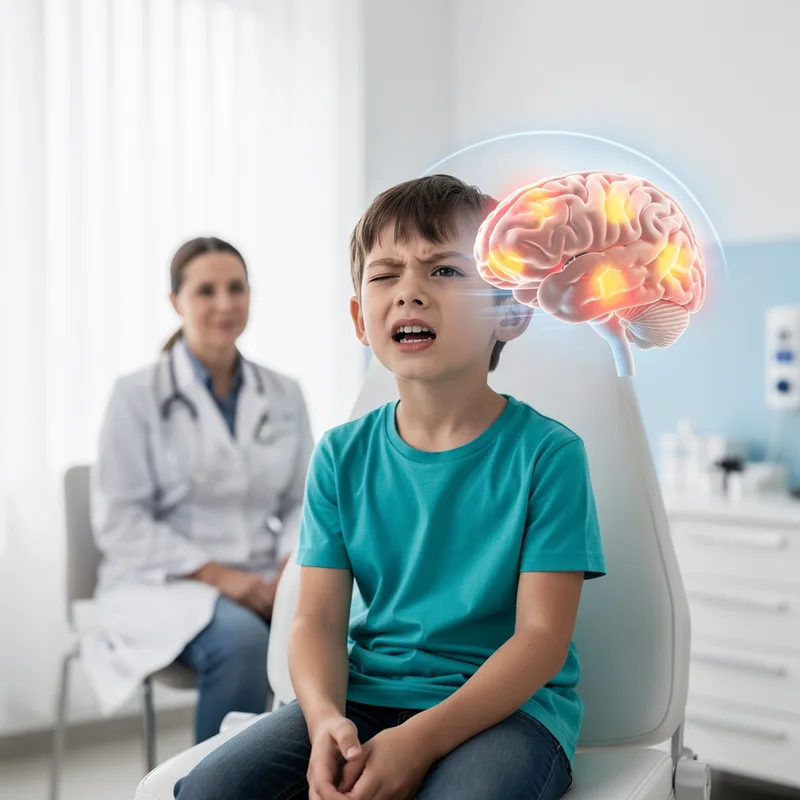
Tourette's syndrome
 4
6.2
4
6.2

- noun
- /tuˈrɛts ˈsɪnˌdroʊm/
- Specialized
- Many people with Tourette's syndrome experience involuntary tics and vocalizations throughout their lives.
- Tourette's syndrome is a neurological disorder
- disorder called Tourette's syndrome
- suffer from Tourette's syndrome
Loading YouTube…
Watch on YouTubeSome days it's like I've got Tourette's syndrome.
- Some days it's like I've got Tourette's syndrome.
- I'm going to switch gears a tiny bit here and talk a little bit about Tourette syndrome.
Examples
-
Children diagnosed with Tourette's syndrome may face challenges due to their involuntary movements and sounds.
-
Doctors often collaborate to develop treatments for patients diagnosed with Tourette's syndrome.
-
Even today, no one knows exactly what causes Tourette's syndrome.
Blog text (28) -
I was diagnosed with Tourette's syndrome when I was 10.
Blog text (28) -
We believe he's suffering from Tourette's syndrome.
-
She suffered from Tourette's syndrome.
Fiction book (1995) -
Tourette's syndrome (TS), once considered a rare disorder, has been investigated extensively in the last two decades.
Academic text (1997)
Synonyms
 1
4.9
1
4.9
A brain condition that makes people make sudden movements or sounds they cannot control

A brain disorder that causes sudden unwanted movements and sounds, sometimes rude words
Surface Forms
Morphology
Tourette's + syndrome
The noun 'syndrome' clearly signals a medical condition or set of symptoms, so a learner who knows that word can infer this is an illness named after someone. However, 'Tourette's' is an eponymic proper name that does not convey the characteristic features (involuntary tics and vocalizations), so the full, specific meaning is not predictable from the parts.
Etymology
Tourette's syndrome is named after the French doctor Georges Gilles de la Tourette, who in the late 1800s studied patients with repeated, sudden movements or sounds called 'tics'. That's why the condition is called Tourette's syndrome today, using the doctor's name to refer to the group of 'symptoms' he first described.