
Raynaud's disease
- noun
- /reɪˈnoʊz dɪˈziːz/
- Specialized
- I have Raynaud's disease.
Examples
-
People with Raynaud's disease are advised to keep their hands and feet warm to prevent attacks.
-
Many people with Raynaud's disease experience numbness in their fingers when exposed to cold temperatures.
-
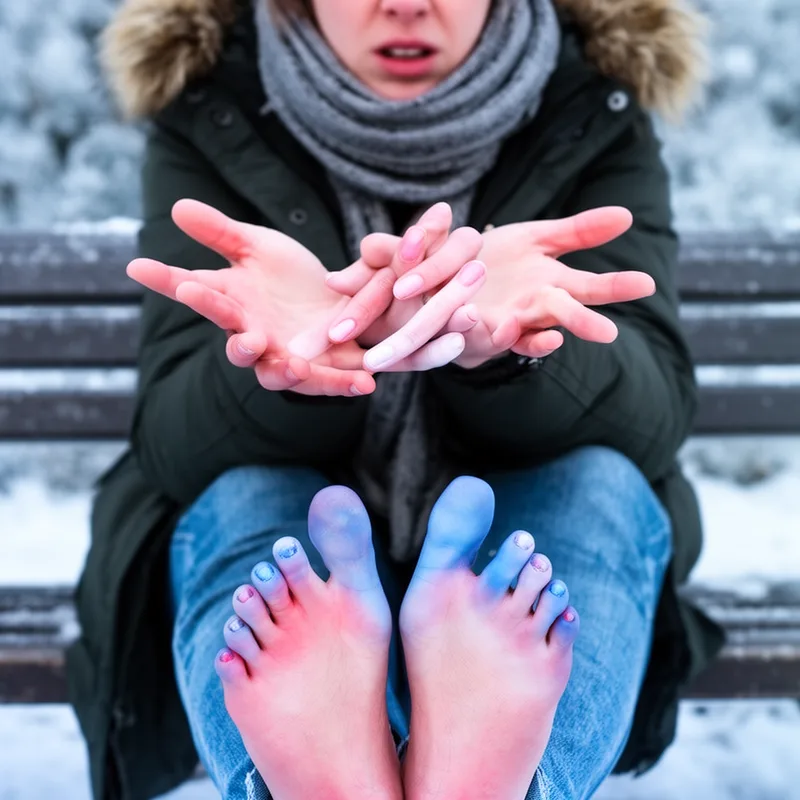
During winter, her Raynaud's disease made her fingers turn pale and numb whenever she went outside.
-
His doctor diagnosed him with Raynaud's disease after he reported frequent color changes in his toes.
-
She was diagnosed with Raynaud's disease last year.
-
Due to Raynaud's disease, her fingers often turn white and become painful in chilly weather.
-
He learned that Raynaud's disease could be triggered by stress, causing his toes to feel cold and tingly.
Surface Forms
Morphology
Raynaud's + disease
Raynaud's is an eponymic proper name that carries no descriptive lexical meaning for learners, so knowing 'disease' only signals that it is an illness but gives no information about symptoms or mechanisms. Because the specific sense (reduced blood flow to fingers/toes triggered by cold or stress) cannot be derived from the constituents, this is opaque to a B1 learner.
Etymology
Raynaud's disease is named after a doctor, Dr Raynaud, who saw people's fingers and toes turn white or blue when they were very cold or stressed. That's why Raynaud's disease means 'less blood reaches the fingers and toes, making them numb and turn white or blue'.

