
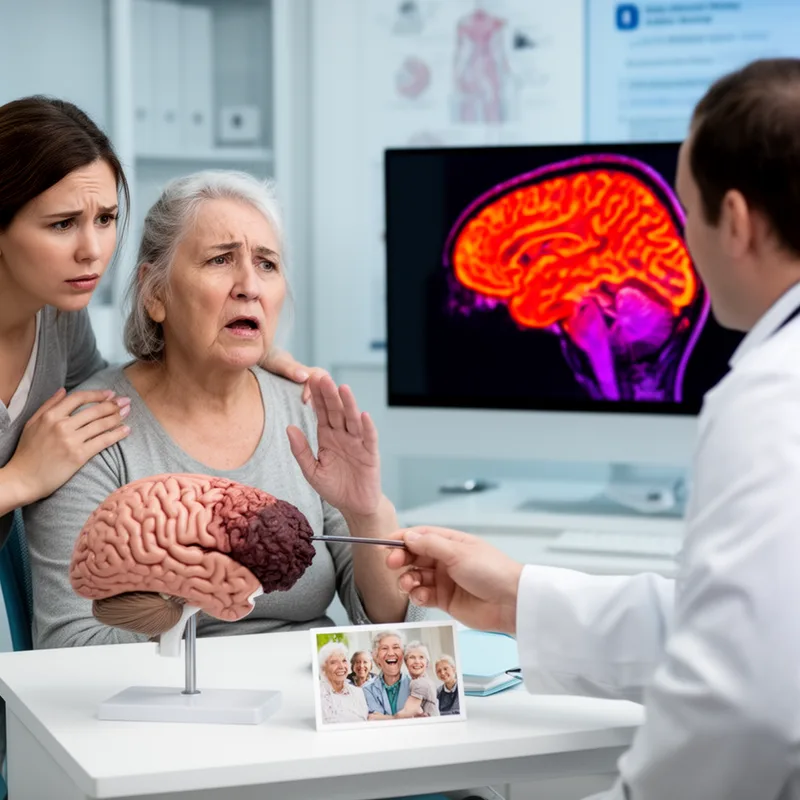
Pick's disease
 2
9.4

- noun
- /pɪks dɪˈziːz/
- Specialized
- Researchers are studying the genetic factors that contribute to Pick's disease and other forms of dementia.
Examples
-
My grandmother was diagnosed with Pick's disease last year.
-
Progressive degeneration in the frontal lobe is a hallmark of Pick's disease.
-
Her grandmother was diagnosed with Pick's disease after displaying changes in personality and speech difficulties.
-
Doctors are still researching Pick's disease to find better treatments.
-
When the doctor explained that my father had Pick's disease, I struggled to understand how his behavior had changed so quickly.
-
The support group helped me connect with others who were dealing with a loved one's Pick's disease.
-
After observing her forget important names and events, we sought help and learned it was Pick's disease.
Surface Forms
Morphology
Pick's + disease
The structure "Pick's disease" is an eponymous possessive ('Pick's' + 'disease'), so a learner who knows 'disease' will infer it is a medical condition named after someone called Pick. However, the specific sense (a rare progressive form of dementia affecting frontal and temporal lobes) cannot be derived from the constituents, so the exact medical meaning is not predictable without prior exposure.
Etymology
The name Pick's disease comes from doctor Arnold Pick, who first described patients with big changes in personality, memory and speech in the late 1800s. So today Pick's disease is used to mean this specific rare form of 'dementia'.