

Payne's gray
- noun
- /peɪnz ɡreɪ/
- Specialized
- The artist chose Payne's gray for the background of her painting.
- Payne's gray warmed with burnt
Examples
-
She chose Payne's gray as the base color for her landscape painting.
-
The artist added Payne's gray to his palette to create various shades of shadows.
-
He mixed a little Payne's gray with white to achieve a soft, moody background.
-
Many watercolorists prefer Payne's gray over black for subtle shading.
-
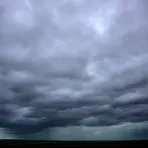
The artist chose Payne's gray to create the stormy sky in her painting.
-
I love mixing Payne's gray with other colors.
-
Many painters prefer using Payne's gray for adding depth to their artwork.
Synonyms
 5
2.0
5
2.0

Gray with a little blue like the sky before a storm
 2
2.7
2
2.7
A color that is mainly blue with some gray
 1
4.8
1
4.8
A dark blue-gray color like a wet stone or a storm sky
 1
2.5
1
2.5
A grey color with a touch of blue


 1
3.4
1
3.4
A blue color like the sky when clouds make it less bright

A dark color with a little purple or blue used in painting
How Dark

Surface Forms
Morphology
Payne's + gray
The noun 'gray' clearly signals a color, so a learner who knows 'gray' and understands possessives will infer that this denotes a kind or shade of gray. However, 'Payne's' is an eponym (a proper name) and gives no information about the specific bluish-dark hue, so the precise meaning of the pigment is not predictable without prior exposure.
Etymology
Payne's gray is named after the English painter William Payne, who often mixed blue and black to make a deep, stormy grey for skies. That's why the name means 'dark bluish-grey' used by artists.