
Euclid's second axiom
- noun
- Specialized
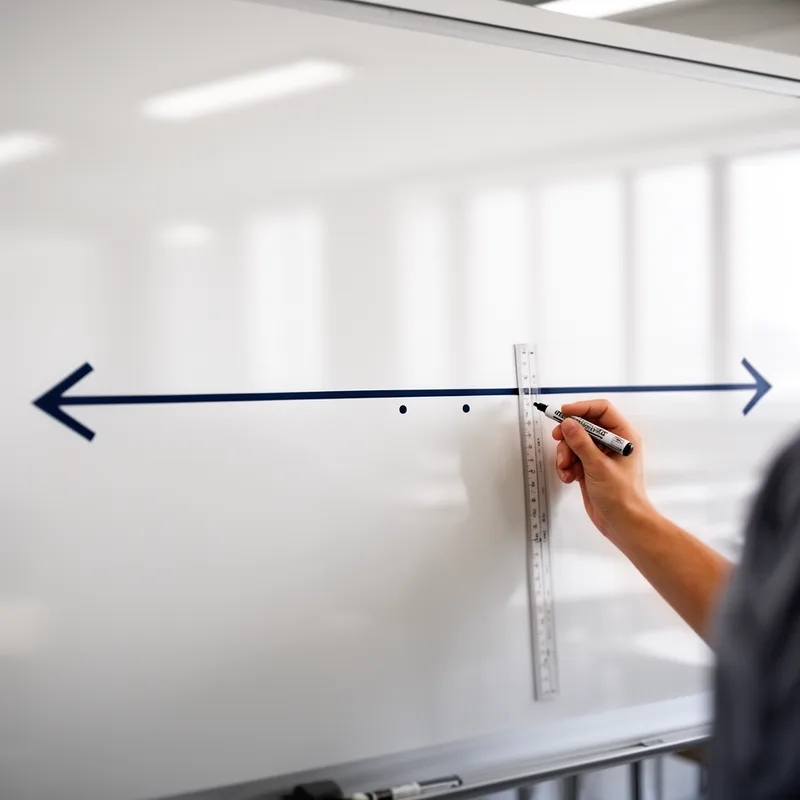
- According to Euclid's second axiom, any finite straight line can be extended continuously without limit in a straight line.
Examples
-
According to Euclid's second axiom, a line can be extended indefinitely.
-
The teacher explained Euclid's second axiom as a foundation for constructing infinite lines in geometry.
-
According to Euclid's second axiom, a straight line can be extended without any limit in either direction.
-
Understanding Euclid's second axiom is essential to grasp the concept of unbounded lines in classical geometry.
-
Can you explain Euclid's second axiom to me?
-
The principles of geometry are built on Euclid's second axiom, which states that a straight line can be extended indefinitely.
-
In geometry, Euclid's second axiom dictates that one can draw a straight line that continues without end.
Surface Forms
Morphology
The phrase is a straightforward possessive + ordinal + noun construction: 'Euclid's' (author), 'second' (ordinal), 'axiom' (fundamental statement), so a learner who knows those words will understand it refers to the second axiom formulated by Euclid. This compositional, referential naming pattern is predictable and cross-linguistically common, even if the learner would not know the axiom's detailed content without background in geometry.
Etymology
Euclid's second axiom is a simple rule from the ancient Greek mathematician Euclid: imagine a short straight line and keep making it longer so you can extend it 'without limit'. That's why the axiom means a line can be stretched on and on and so has no end.

