
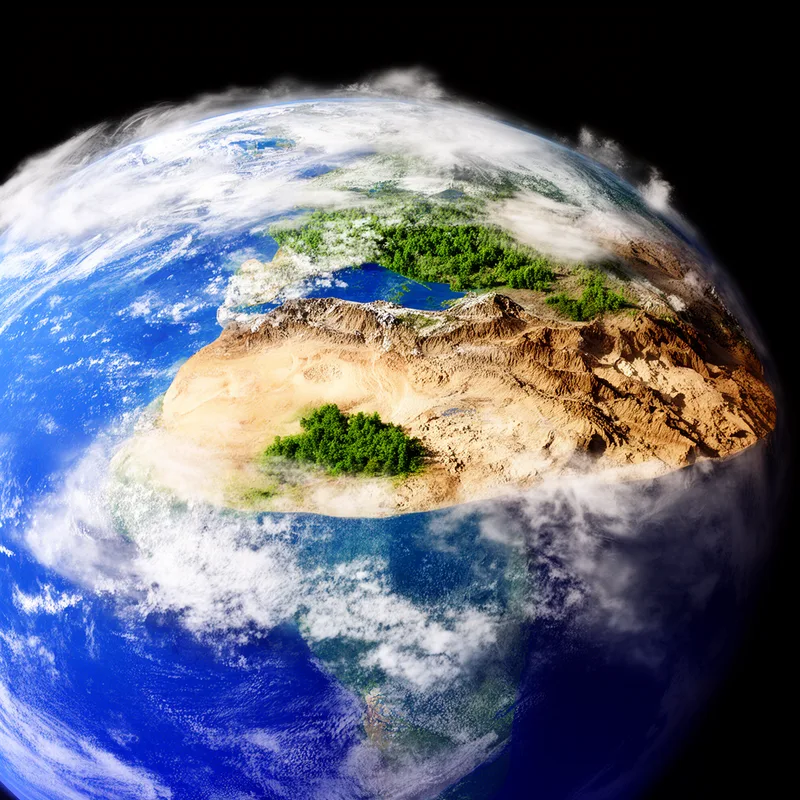
Earth's surface
 15
2.7
15
2.7

- noun
- Two miles below Earth's surface.
- Earth's surface temperature
- warms the Earth's surface
- reach the Earth's surface
Examples
-
There are two reasons why it is impractical to detect these sources from Earth's surface.
Academic text (2001) -
Approximately 71 percent of the Earth's surface is covered with water.
Academic text (2003) -
Therefore, our ability to affect in this case, the Earth's surface, was completely changed.
-
On a particularly clear day, you can sometimes see the very curve of the Earth's surface at the horizon.
Academic text (2003) -
Seven-tenths of this Earth's surface is water.
-
Predict natural disasters most likely to occur on the Earth's surface.
Academic text (2013) -
The geologists needed billions of years to account for Earth's surface features.
Academic text (1998) -
In addition, clouds affect the amount of UV that is incident on the Earth's surface.
Academic text (1998) -
As sunlight warms Earth's surface, Earth radiates the energy back toward space as infrared light.
Academic text (2008) -
Only about 20 percent of the Earth's surface is covered by land.
Synonyms
 ∞
1.0
∞
1.0
The top layer of something that you can see or touch
 49
3.8
49
3.8
The surface of the world or being anywhere in the world
 1
7.0
1
7.0
The Earth or its surface, especially as seen from space
Surface Forms
Morphology
Earth's + surface
The meaning is directly compositional: 'Earth's' marks possession/association with the planet Earth and 'surface' means the exposed outer layer, so together they straightforwardly denote the planet's outermost layer. This possessive + noun pattern is cross-linguistically common and follows ordinary English composition, so a B1 learner who knows the constituent words will readily understand it.
Etymology
Earth's surface is like the thin skin that covers the planet — the surface is the outside you can walk or sail on, the 'land' and 'sea'. That's why the phrase means 'the outside part of Earth where life lives'.