

Duke of Argyll's tea tree
- noun
- After flowering, the Duke of Argyll's tea tree produces clusters of bright orange-red berries.
Examples
-
The Duke of Argyll's tea tree is often grown for its ornamental berries and attractive foliage.
-
The Duke of Argyll's tea tree is known for its beautiful flowers.
-
Gardeners appreciate the Duke of Argyll's tea tree for its ability to thrive in difficult soils.
-
I saw a Duke of Argyll's tea tree in the botanical garden.
-
After flowering, the Duke of Argyll's tea tree produces clusters of bright orange-red berries.
-
The Duke of Argyll's tea tree is often grown for its ornamental berries and attractive foliage.
-
Gardeners appreciate the Duke of Argyll's tea tree for its ability to thrive in difficult soils.
Synonyms

A bush with spiny branches, purple flowers, and orange-red berries

A small bush with spiny branches that produces bright orange-red berries called goji berries
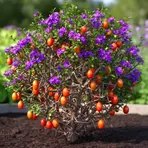
A bush with thorny branches, purple flowers, and orange-red berries
Surface Forms
Morphology
duke + of + Argyll's + tea + tree
The noun 'tea tree' transparently denotes a type of shrub/tree, and the possessive 'Duke of Argyll's' simply marks association or naming after a person/place. This possessive naming pattern is cross-linguistically common, so a B1 learner who knows the constituent words would infer it is a specific kind of tea tree named for the Duke of Argyll.
Etymology
Duke of Argyll's tea tree probably comes from the Duke of Argyll, a Scottish noble who grew and shared the shrub with gardeners. The words tea tree come from its small leaves, which people once used like 'tea', so the name links the person and the plant.

