

Davy's gray
- noun
- /ˈdeɪviz ɡreɪ/
- Archaic
- She mixed a small amount of blue into the Davy's gray to achieve the perfect tone.
Examples
-
This room looks elegant when the walls are painted in Davy's gray.
-
The artist chose Davy's gray to create subtle shadows in his landscape painting.
-
The artist chose Davy's gray for the background.
-
I love the subtle tone of Davy's gray in this painting.
-
For the landscape painting, she chose Davy's gray to create a moody atmosphere in the sky.
-
The artist mixed Davy's gray with white to achieve a subtle shadow effect on the canvas.
-
In his latest artwork, he incorporated Davy's gray to emphasize the depth and richness of the scene.
Synonyms
 5
2.0
5
2.0

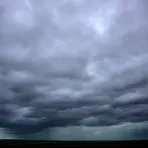
Gray with a little blue like the sky before a storm
 2
3.5
2
3.5
A dark grey color with a slight blue or purple tone
 2
2.7
2
2.7
A color that is mainly blue with some gray
 1
4.8
1
4.8
A dark blue-gray color like a wet stone or a storm sky
 1
2.5
1
2.5
A grey color with a touch of blue


 1
3.9
1
3.9
A dark grey color like iron
 1
3.4
1
3.4
A blue color like the sky when clouds make it less bright

A dark grey color with a slight blue or purple tone

A dark blue-grey color artists use in painting
Surface Forms
Morphology
Davy's + gray
Because the headword contains 'gray', a B1 learner who knows that word will correctly infer that this is a named shade of gray; however the 'Davy's' element is an eponym (a proper name) that gives no information about the specific bluish/purplish nuance. The precise hue and nuance cannot be derived from the constituents alone, so the expression is only partially predictable to learners.
Etymology
Davy's gray may come from the name of the English chemist Humphry Davy; one popular story says he helped make a common dark 'paint' in the 1800s. Painters used that paint for cool, bluish shadows, so the name now means a slightly purplish or bluish dark 'color'.