

Culver's root
- noun
- US
- In the wildflower garden, Culver's root adds vertical interest with its tall flower spikes.
Examples
-
You can find Culver's root blooming in moist meadows during the summer months.
-
Look at this Culver's root!
-
Early settlers used Culver's root for its purported medicinal properties.
-
What a beautiful Culver's root!
-
The tall spikes of Culver's root are a beautiful sight in summer gardens.
-
In the eastern woodlands, Culver's root grows alongside other native plants, thriving in the moist environment.
-
Gardeners appreciate Culver's root for its striking white flowers that attract pollinators.
Synonyms

A tall flowering plant with long spikes of white or purple flowers, also called Culver's root
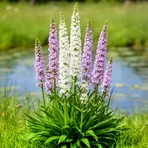
A tall plant that lives many years with spikes of small white or purple flowers

A tall plant from eastern North America with spikes of small white or purple flowers
Surface Forms
Morphology
Culver's + root
The element 'root' clearly signals a plant-related meaning, so a B1 learner who knows 'root' could guess the phrase refers to a plant or plant part. However, 'Culver's' is an unfamiliar proper name and the phrase is a species/common name (referring to the whole herb, not literally just a root), so the exact meaning (a tall perennial herb Veronicastrum virginicum) is not fully derivable from the constituents. This makes the term partially transparent but not predictable without exposure.
Etymology
Culver's root may come from an early doctor named Culver who used the plant's root as a medicine to help 'clean out' the body. So the name links the plant to its old use as a medicinal root.

