
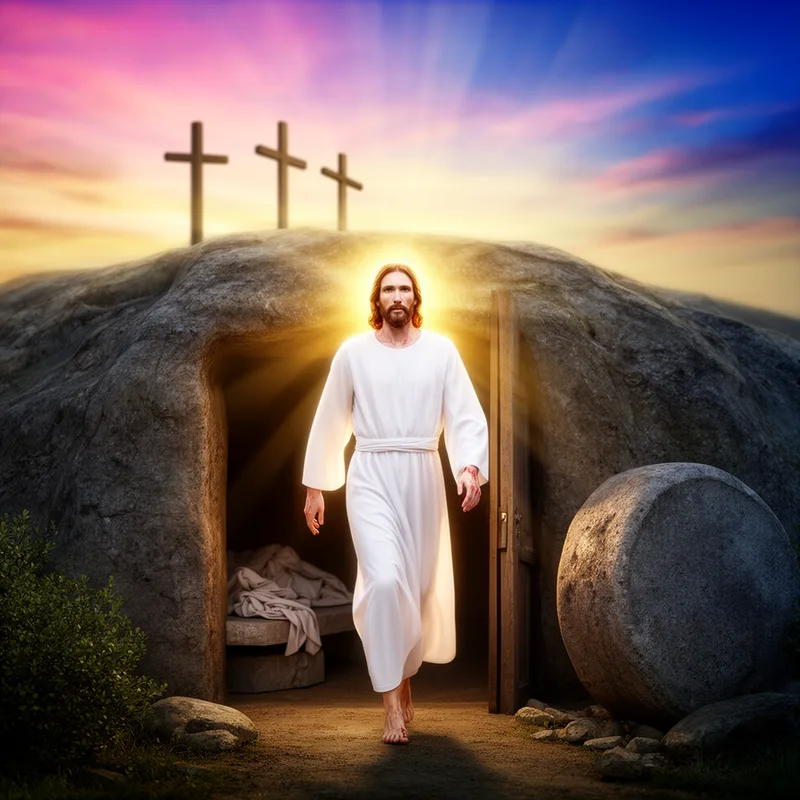
Christ's Resurrection


 1
6.5
1
6.5
- noun
- /kraɪsts ˌrɛzəˈrɛkʃən/
- The story of Christ's Resurrection is central to Christian teachings about life and hope.
Examples
-
If Christ's resurrection guarantees a triumphant conclusion to God's cosmic drama, these theologians refocus our attention on the fact that the resurrected Christ was and will remain the crucified one.
Academic text (2009) -
The belief in Christ's resurrection is both the product of experience and interpretation, and leads to new experience and interpretation.
Academic text (2006) -
It was no accident that the first person charged with spreading the good news of Christ's resurrection was a woman.
Blog text (20) -
It is important, therefore, to realize that Christ's Resurrection is in living and historical continuity with the divine action of creation.
Academic text (2003) -
But, the rejoinder goes, this death is not final, and the "heart" of Christianity expresses God's ultimate triumph over sin and death in Christ's resurrection.
Academic text (2009) -
Many Christians celebrate the joy of Christ's Resurrection each Easter Sunday.
-
After his death, the belief in Christ's Resurrection gave the disciples strength to spread his message.
Synonyms
 50
7.5
50
7.5
A Christian belief that Jesus rises from the dead on the third day after his death
 5
3.8
5
3.8
An event when Jesus rose from the dead three days after his death on a cross
 1
4.4
1
4.4
The event when Jesus rose from the dead on the third day after he died on the cross
Antonyms

Surface Forms
Morphology
Christ's + Resurrection
The phrase is compositional: 'Christ's' is a possessive marking and 'Resurrection' denotes rising from the dead, so a learner who knows both constituents can infer it refers to the resurrection of Christ. While full cultural or theological significance may require background knowledge, the basic referential meaning is directly derivable and follows a standard possessive + event pattern.
Etymology
Christ's Resurrection comes from the Christian story that Jesus 'rose from the dead' on the third day after his death on the cross. In the story his tomb was found empty and his friends saw him alive, so today the phrase means that event and the promise of 'new life' celebrated at Easter.