
Audubon's caracara
- noun
- /ˈɔːdʒəˌbɒnz ˈkærəˌkærə/
- US
- Conservationists are studying the habitats of the Audubon's caracara to ensure their populations remain stable.
Examples
-
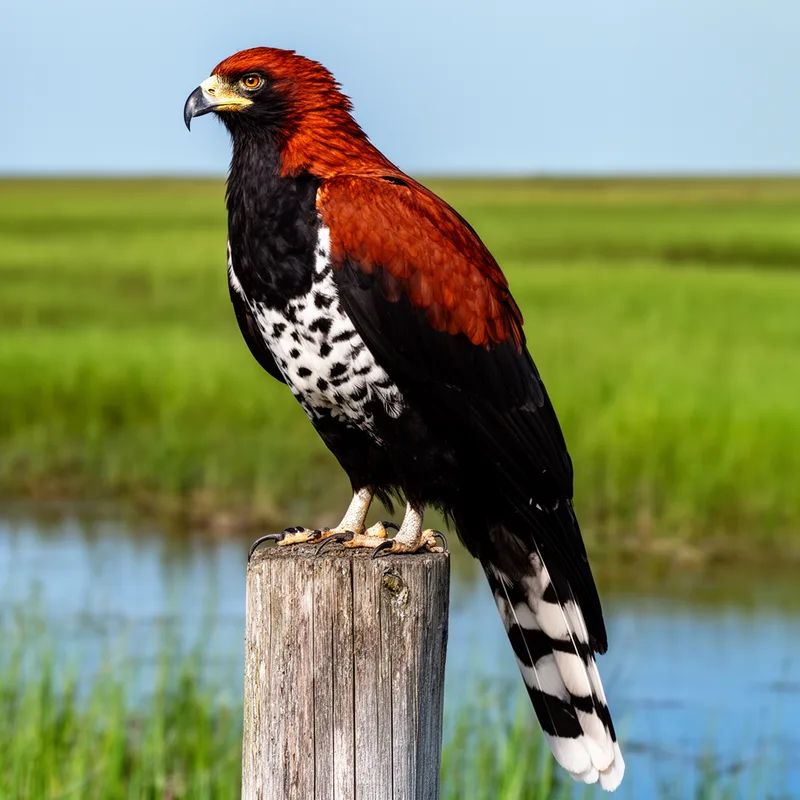
We spotted an Audubon's caracara perched elegantly on a fence post near the marsh.
-
The distinct markings on the Audubon's caracara make it easy to recognize among other birds of prey.
-
The Audubon's caracara is often seen in open grasslands.
-
Have you ever spotted an Audubon's caracara in the wild?
-
The distinct markings on the Audubon's caracara make it easy to recognize among other birds of prey.
-
We spotted an Audubon's caracara perched elegantly on a fence post near the marsh.
-
The Audubon's caracara is often seen in open grasslands.
Synonyms


 1
9.9
A long-legged hawk that eats dead animals in Central and South America
Surface Forms
Morphology
Audubon's + caracara
The expression is a possessive proper name plus a noun: 'Audubon's' (a person’s name) + 'caracara' (a bird) yields a species named after Audubon, so the overall meaning — a type of caracara — is directly inferable from the parts. Possessive naming of species is a regular, cross-linguistic compositional pattern, so a B1 learner who knows the constituents would understand it.
Etymology
Audubon's caracara is named after the famous bird artist Audubon, and caracara is the common name for a kind of hunting bird. So the name tells you this is that type of bird and that people linked it to 'Audubon'.