
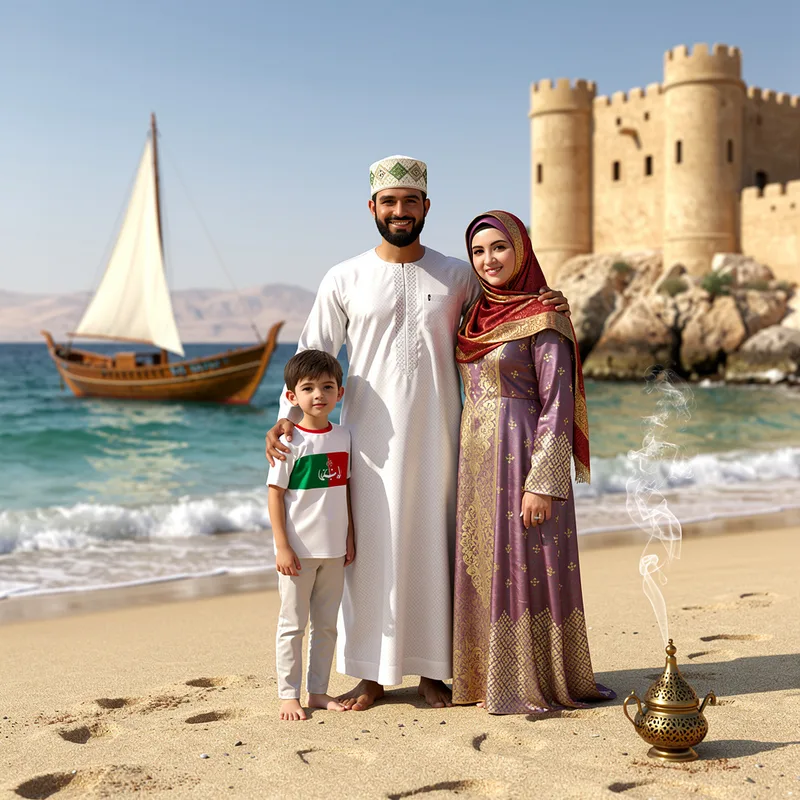
Omani
 1
5.7
1
5.7

- adjective
- /oʊˈmɑːni/
- The first Arab pavilion in the entire 40-year history of the Smithsonian Folklife Festival opened in 2005, featuring Omani musicians, dancers, and craftspeople.
- Omani sultanate
- Omani elite
- Omani ceremonial
Examples
-
By the 1980s, most of the field workers were foreigners, and most farms were run by people of Egyptian, Omani, and East Asian origin.
Academic text (2015) -
The sitter is dressed in official Omani ceremonial garb, which includes a multicolored turban and a long, black overcoat with gold embroidery.
Academic text (2009) -
We just finished a lovely dinner in the tent and now we have hot Omani tea, a fire and so many stars to watch.
-
In all likelihood, Omani oil production will continue to decline.
Academic text (2008) -
The Omani governor appointed in 1819 held political as well as economic control in the new town.
Academic text (2006) -
An Omani proposal for a force larger than the 10,000 Peninsula Shield was rejected.
Academic text (1995) -
Moreover, the social milieu of Omani males permits them to find alternatives in the labor market, even if they do not hold higher degrees.
Academic text (2013) -
An Arab-Omani ceremonial costume featuring a turban, belt, embroidered robe, and ceremonial sword is laid out for display.
Academic text (2009) -
Historically, the country's regions have experienced a diverse array of governments, which included Swahili city-states, an Omani sultanate based in Zanzibar, a European colonial administration, and an independence-era socialist government.
Academic text (1998) -
At the festival, visitors enjoyed traditional Omani music and dance performances that celebrated the culture.
Compounds

Surface Forms
Morphology
Etymology
The word Omani comes from the country name Oman plus the ending -i, which means 'from' or 'of'. That's why Omani describes people, culture, or things 'from Oman', like American for things 'from America'.