

leopard's-bane
- noun
- /ˈlɛpərdz beɪn/
- Many gardeners prefer leopard's-bane for its bright yellow flowers that attract bees.
Examples
-
In spring, the leopard's-bane flowers add a burst of color to the garden.
-
The gardener planted leopard's-bane in the flowerbed for its beautiful yellow blooms.
-
In this light, they looked almost yellow, he thought; the eyes of a big cat, a leopard's eyes.
Fiction book (1992) -
Debbie, there's a bunch of a babies lost around here, and the leopard"s after them!
-
The leopard's favorite prey, impalas and gazelles, are attracted to luggas, or seasonal rivers, near the gorge.
Academic text (2011) -
She was a tidy sleeper (like a corpse, a doll, an angel; how differently some men saw things: she remembered that her sleeping had also once been compared to a leopard's on the branch of a tree), but now she could not sleep.
Fiction book (2000)
Synonyms

A garden plant with long stems and bright yellow flowers that grows each year
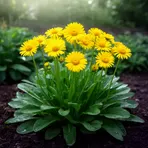
A plant that lives for several years with bright yellow flowers like a daisy
Surface Forms
Morphology
Etymology
Leopard's-bane combines leopard and bane, where bane means 'poison' or 'killer', just like in wolfsbane. So the name suggests a plant thought to be harmful to leopards and helps you remember that this garden plant can be poisonous.

